
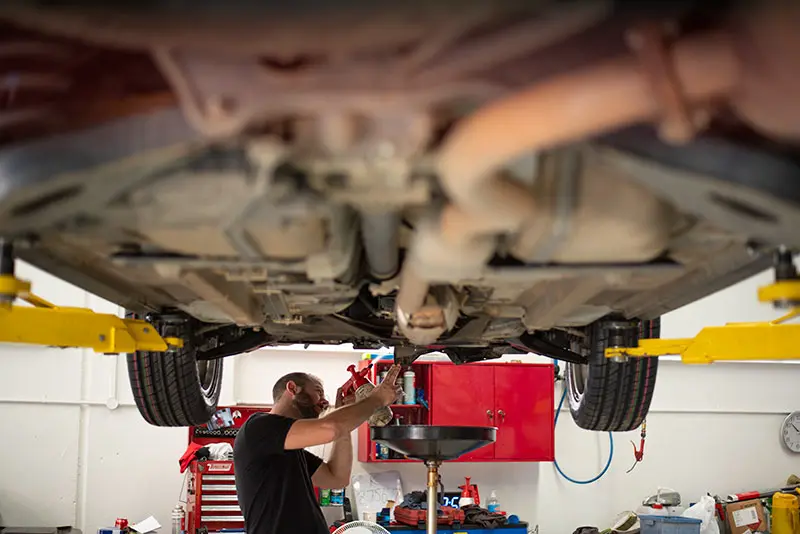
If you drive a manual VW, BMW, Audi or Mercedes, you already know these cars reward good driving. But that same precision engineering has a flip side. European clutch systems are built to tighter tolerances than most. They’re more sensitive to traffic, driving style and neglect.
That sensitivity is exactly why clutch problems creep up on Melbourne drivers. A soft pedal here. A faint burning smell there. Small warning signs, easy to ignore, until the clutch fails altogether.
In this guide, we’ll walk through the real symptoms of a failing clutch, what causes premature wear, and what happens if you leave it too long. We’ll also explain why a proper diagnostic and fault-finding service is the safest way to get an accurate answer before you spend money on repairs.
How a Clutch Works (Quick Refresher)
You don’t need to be a mechanic to understand the basics. A manual car’s clutch works by connecting and disconnecting the engine from the transmission.
- The clutch disc (or friction plate) sits between the flywheel and pressure plate.
- When you press the clutch pedal, the pressure plate releases, and the clutch disengages the engine from the gearbox.
- When you release the clutch pedal, spring pressure pushes the clutch disc back against the flywheel. Power flows through again, and you accelerate smoothly.
Simple enough. But European manuals often use dual-mass flywheels (DMF) to smooth out engine vibration. These add extra moving parts, extra failure points, and extra sensitivity to wear. That’s one reason BMW, Audi and VW clutch components tend to show warning signs earlier than a basic single-plate setup in a run-of-the-mill hatchback.
7 Warning Signs of a Failing Clutch
Here are the signs of a failing clutch every manual car owner in Croydon and across Melbourne’s east should know.
- Spongy or soft clutch pedal
A soft or spongy clutch pedal usually points to air in the hydraulic system, or a problem with the master or slave cylinder. If the clutch pedal feels different to how it did last month, don’t ignore it.
- Slipping gears
This is the classic sign that the clutch is slipping. You’ll notice the engine revs climbing, but your speed doesn’t keep up. It’s most obvious under load, like accelerating up a hill or overtaking.
- Burning smell when driving uphill or in traffic
A burning smell is caused by the friction material overheating on the clutch disc. It tends to show up after stop-start traffic, hill starts, or riding the clutch. If you smell it, get the car looked at soon.
- Difficulty shifting gears or grinding noise
Trouble shifting gears, or a grinding noise when you change gear, can point to a worn clutch disc, a release bearing issue, or air in the hydraulic clutch line.
- The clutch pedal is sticking to the floor
If the clutch pedal doesn’t spring back after you press it, that’s often a hydraulic fault. A worn clutch fork or clutch linkage can cause the same problem.
- Juddering or shaking on take-off
Juddering when you release the clutch pedal from a standstill is a common early warning sign. It can mean the clutch disc has worn unevenly, or that oil has contaminated the friction material.
- Squealing or rattling when the pedal is pressed
A squeal or rattle when you press the clutch pedal often means the clutch release bearing is on its way out. Left alone, it typically gets louder and can fail.
What Causes Premature Clutch Wear in Manual Cars?
Some clutch wear is simply wear and tear. But several habits and conditions speed it up, especially here in Australia:
- Riding the clutch in traffic. Melbourne is one of the more congested cities in the country, and it’s getting worse. TomTom’s 2025 Traffic Index puts Melbourne’s average congestion level at 52.9%, with the average driving speed sitting at just 26.3 km/h. Stop-start conditions like that make it tempting to “ride” the clutch pedal instead of using the handbrake, and that habit wears the clutch disc fast.
- Towing or carrying heavy loads. Extra weight means more strain every time you engage the clutch.
- Dual-mass flywheel issues. VW, BMW and Audi diesels are particularly prone to DMF wear, which can mimic or accelerate clutch problems.
- Fluid leaks in the hydraulic system. A leak at the master or slave cylinder reduces clutch pressure and causes slipping.
Manual driving itself is becoming rare in Australia. Fewer than 4% of new cars sold in Australia now come with a manual transmission, which means fewer drivers are used to clutch habits that protect the car. If you’ve picked up a manual VW, BMW, Audi, or Mercedes, a little extra care goes a long way.
Why Guessing Is Risky — The Case for Proper Diagnosis
Clutch symptoms overlap heavily with gearbox faults, dual-mass flywheel wear, and hydraulic system problems. A judder, for example, could be the clutch disc, the flywheel, or an engine mount. Slipping could be the clutch or a transmission fault altogether.
Guessing wastes money. You might replace a clutch kit when the real issue was a leaking slave cylinder.
This is where a proper diagnostic and fault-finding service earns its keep. At Arnpro Automotive, we use brand-specific diagnostic tools for BMW, Audi, VW and Mercedes to read fault codes and isolate the real issue, engine and transmission included, before recommending any repair. You can read more about our approach on our diagnostic and fault-finding page.
What Happens If You Ignore a Failing Clutch?
Putting off an inspection rarely ends well.
- Safety risk. A clutch that fails can leave you stranded or unable to change gear safely in traffic.
- Flywheel and gearbox damage. A worn clutch disc or a bad clutch can damage the flywheel or gearbox, turning a simple job into a bigger one.
- Roadworthy implications. In Victoria, a vehicle needs to pass inspection for a roadworthy certificate when sold or re-registered. Clutch and transmission faults can affect that outcome.
The earlier the clutch is inspected, the more options you have.
Clutch Repair & Maintenance — What to Expect
Every workshop approaches clutch repair and maintenance a little differently, but the process is usually straightforward:
- Diagnosis — isolating whether it’s the clutch disc, pressure plate, flywheel, or hydraulic system.
- Parts — sourcing the right clutch kit, and a replacement dual-mass flywheel if needed.
- Replacement — removing the gearbox to access and replace worn clutch components.
- Road test — confirming smooth engagement, no slip, and no noise before handover.
Cost varies depending on whether you need a single or dual-mass flywheel, and your specific make and model. We’re happy to talk you through the factors during a proper inspection, rather than guessing over the phone.
A few habits that extend clutch life:
- Avoid riding the clutch at lights or in traffic — use the handbrake instead.
- Select the correct gear rather than slipping the clutch to control speed.
- Get the clutch inspected at the first sign of trouble, not the last.
Symptom, Likely Cause & Urgency
| Symptom | Likely Cause | Urgency Level |
| Burning smell in traffic | Overheating the friction material | High |
| Clutch slipping under load | Worn clutch disc or pressure plate | High |
| Spongy or soft clutch pedal | Air in the hydraulic line, master/slave cylinder fault | Medium |
| Juddering on take-off | Uneven wear, oil contamination, or a flywheel issue | Medium |
| Grinding when changing gear | Worn release bearing or clutch fork | High |
| The pedal is sticking to the floor | Hydraulic fault or linkage issue | High |
| Squealing when the pedal is pressed | Failing release bearing | Medium |
If you’re seeing any of the above, book our repair and maintenance service for a proper look before it becomes a bigger job.
Don’t Guess — Get an Accurate Answer
A failing clutch rarely fixes itself. Left alone, a small issue like a soft pedal or a faint burning smell can turn into a full clutch failure or damage to the flywheel and gearbox.
If you’re noticing any of these signs, book our diagnostic and fault-finding service today for an accurate assessment and expert clutch repair and maintenance. We’ll isolate the real issue on your BMW, VW, Audi or Mercedes, so you’re not paying for guesswork.
Book a Diagnostic Inspection →
FAQs
It depends on driving style and conditions, but city driving and towing shorten clutch life. Regular inspection is the best way to know where yours stands.
Short trips may be possible, but a slipping clutch gets worse quickly and can leave you stranded. Book an inspection as soon as you notice it.
Symptoms overlap a lot. Only a proper diagnostic and fault-finding service can confirm which one is actually at fault.
Cost depends on your make, model, and whether a dual-mass flywheel is needed. We’ll give you an accurate figure after inspecting your car.