
A blocked DPF (diesel particulate filter) on a European diesel is almost always caused by the same thing: short-trip, stop-start driving that never lets the filter complete a proper regeneration cycle. At our Croydon workshop, we see this constantly on BMW 320d and 520d, Mercedes-Benz C220d and Sprinter, Audi A4 TDI and VW Golf TDI, typically between 80,000 and 150,000 km. It is one of the most preventable DPF problems facing modern diesel owners in Melbourne. This guide covers why it happens, how to spot it, what it costs to fix, and how to stop it recurring.
What a DPF Actually Does and Why Every Euro 5/6 Diesel Has One
The diesel particulate filter is a ceramic honeycomb fitted in the exhaust system of virtually every diesel engine sold in Australia since late 2013. Australian Design Rule 79/04 required new passenger vehicles to meet Euro 5 emission standards from November 2013, with Euro 6 phasing in from 2017. The DPF system is central to meeting those standards.
As hot exhaust gas passes through the filter, soot particles are trapped in the ceramic walls. Over time, soot and ash accumulate. Soot can be burned off through regeneration; ash cannot. What we see in our Croydon workshop is that most owners have no idea this component exists until a warning light appears, often when the DPF is already heavily loaded.
Removing or bypassing a DPF on a road-registered vehicle in Victoria is illegal under EPA Victoria regulations. A deleted diesel will fail a roadworthiness inspection.
How DPF Regeneration Works: Passive, Active and Forced Diesel Particulate Filter Regen
A DPF clears its soot loading through three types of regeneration, and understanding these explains exactly why the dreaded DPF problem is so common in Melbourne.
- Passive regeneration happens automatically when exhaust temperatures exceed roughly 600 degrees, typically during sustained highway driving. The soot oxidises and exits as CO2. No driver input is needed. This is how a DPF is designed to keep itself clean.
- Active regeneration is triggered by the ECU when soot loading hits a preset threshold. The engine management system injects a fuel pulse to raise exhaust temperatures and force a regen. It takes around 10 to 20 minutes of driving. If you stop mid-cycle, the ECU will retry next time.
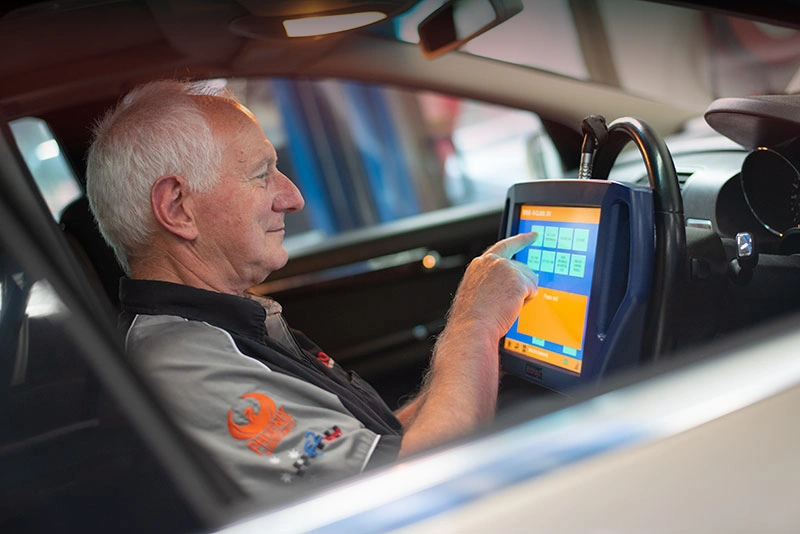
- Forced (manual) regeneration is a workshop procedure for when the DPF is too loaded for the ECU to manage on its own. A mechanic connects a diagnostic tool and commands a controlled burn cycle while the vehicle is stationary. This is the most common DPF service at our Croydon workshop and the first step before physical cleaning or replacement.
| Regeneration type | Where it happens | Driver action | Time taken |
|---|---|---|---|
| Passive | On the road, automatically | None | Continuous |
| Active | On the road, ECU-triggered | Keep driving | 10 to 20 minutes |
| Forced / manual | Workshop, stationery | Book a service | 30 to 60 minutes |
Why Melbourne Driving Destroys DPFs Faster: Stop-Start and Short Trips
The eastern suburbs commute along Canterbury Road, Maroondah Highway or through Croydon and Ringwood is textbook stop-start driving. Speeds rarely sustain above 60 km/h long enough for passive regeneration to complete. The DPF accumulates soot and rarely clears itself.
Short trips compound the DPF problem further. When an active regen aborts because you have parked, the ECU has already injected extra fuel into the exhaust. That unburnt fuel dilutes the engine oil, raising the oil level and degrading lubrication. Cold-engine school runs, 10 minutes each way, twice a day, are the worst-case scenario we see in our workshop. Occasional highway driving is not enough to undo a week of city driving under these conditions.
7 Warning Signs Your DPF Is Blocked
- DPF warning light on the dashboard. The earliest signal. A 20 to 30-minute highway drive at this stage may still clear it.
- Loss of power and limp mode. The ECU restricts boost to protect the engine as DPF backpressure builds.
- Poor throttle response. The turbo is fighting increasing exhaust backpressure, and the car feels flat.
- Rising fuel consumption. Repeated active regen attempts burn extra fuel and hurt fuel efficiency.
- Strong exhaust smell. Unburnt hydrocarbons escaping past a clogged DPF or aborting regen cycles.
- Cooling fan running long after the engine is off. A blocked DPF forces the system to work harder during regeneration.
- Rising engine oil level. Diesel dilution from repeated aborted regens. If the dipstick reads above maximum, that is fuel contamination.
If you are seeing signs 2 through 7, book a workshop visit immediately. A heavily clogged DPF risks turbocharger damage from sustained exhaust backpressure.
DPF Cleaning and Replacement Costs in Melbourne (AUD)
| Service | Price range (AUD) |
|---|---|
| Diagnostic scan and forced DPF regeneration | $250 to $450 |
| Off-car DPF chemical clean | $700 to $1,400 |
| DPF pressure sensor replacement | $250 to $600 |
| Aftermarket DPF replacement (fitted) | $1,400 to $2,800 |
| OEM DPF replacement (fitted) | $2,800 to $5,500+ |
These are real Australian dollar figures from our Croydon workshop. A dealership service for the same forced regen procedure typically costs 30 to 50 per cent more than an independent specialist. Under ACCC guidance and Australian Consumer Law, using an independent mechanic for DPF cleaning or replacement does not void your manufacturer’s warranty, provided the work meets the manufacturer’s specifications. You are not required to use dealership service to maintain warranty protection.
How to Prevent Re-Blockage
Once a month, take your diesel vehicle for a 20 to 30 minute run on EastLink, the Eastern Freeway or the M3 at 90 to 100 km/h. This gives the DPF time and temperature to complete passive regeneration and clear accumulated soot loading.
Use only ACEA C3-rated low-ash oil. Standard engine oil leaves more ash in the DPF with every service interval. Do not ignore the first DPF warning light; a forced regen at that stage costs a fraction of a new DPF. Keep AdBlue topped up on Mercedes-Benz BlueTec and Euro 6 Audi and VW models, as running low disrupts the DPF system. And if your entire commute is city driving under 15 minutes each way, consider whether a diesel car suits your driving habits at all. Toyota HiLux and Subaru Forester diesel owners have faced the same DPF issues for the same reason.
When to See a Specialist
Ignoring a DPF warning light past limp mode risks turbo damage, turning a $350 regen into a repair bill that can exceed $8,000 on some European models. If your DPF light is on, power is down, or your oil level is mysteriously rising, book a diagnostic at our European car service workshop in Croydon. We read actual soot load, assess whether a forced regen is viable, and give you a straight answer on where your DPF stands. We see BMW, Mercedes-Benz, Audi, VW and Volvo diesel vehicles daily from across Melbourne’s eastern suburbs.
Frequently Asked Questions
For a short distance to reach a workshop, yes. If it is the first-stage DPF warning with no limp mode, a 20 to 30 minute highway drive may still clear it. If you are in limp mode or down on power, stop driving and book a diagnostic. Continued driving risks turbo damage from exhaust backpressure.
Passive regeneration is continuous during highway driving. An active regen takes 10 to 20 minutes of driving. A forced regen at a workshop takes 30 to 60 minutes. A very heavily loaded DPF may need the regeneration process split across two sessions.
A forced regen is $250 to $450. An off-car chemical DPF clean is $700 to $1,400. A new aftermarket DPF fitted is $1,400 to $2,800; OEM DPF replacement runs $2,800 to $5,500+. Early intervention is always the cheapest path.
No. Removing or bypassing a DPF on a road-registered vehicle in Victoria is illegal under EPA Victoria regulations and Australian Design Rule 79/04. A deleted diesel vehicle will fail a roadworthiness check.
No. Under ACCC guidance and Australian Consumer Law, you can have any qualified independent mechanic service your vehicle, including DPF cleaning, without voiding the manufacturer's new-vehicle warranty. Keep your service records and ensure the correct specification parts and fluids are used.