
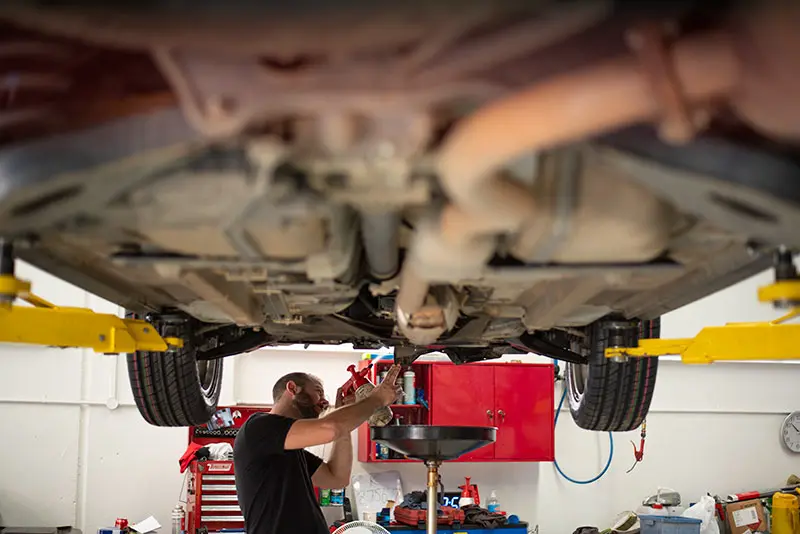
Common car maintenance mistakes like delaying repairs, using cheap parts, skipping diagnostics, and ignoring manufacturer procedures can significantly shorten your car’s life. These errors lead to compounding damage, expensive repairs, and reduced vehicle lifespan. Professional mechanics who follow proper procedures and use quality parts help keep your car running smoothly for years longer.
According to a December 2024 survey, Australians spend an average of $1,205 per year on car maintenance, yet nearly a quarter admit to servicing their car less often due to cost pressures. More concerning, brake-related failures account for 22% of vehicle defect crashes, highlighting how maintenance mistakes directly impact safety and vehicle longevity.
Adrian Taylor, Executive General Manager of General Insurance at Compare the Market, warns: “Avoiding essential car maintenance could risk voiding any car insurance claims.” This underscores how poor repair choices affect more than just your vehicle’s performance; they can impact your financial protection, too.
Why Quality Repair and Car Maintenance Matter More Than Ever
Modern vehicles are more complex than ever, with advanced engine management systems, sophisticated braking technology, and intricate electrical components. The Australian motor vehicle repair industry reached $17.3 billion in 2025, yet competition among workshops has intensified, making it crucial to choose the right repair shop.
When you cut corners on vehicle maintenance or choose unqualified mechanics, you’re not just risking immediate breakdowns; you’re actively reducing your car’s lifespan. Every maintenance mistake compounds over time, turning minor issues into costly repairs that could have been easily prevented. Understanding these common mistakes helps you know your car better and make informed decisions about who you trust with your vehicle.
Most Common Repair Mistakes That Shorten Your Car’s Life and Damage Vehicles
Here’s a list of some common mistakes that shorten the life of your car and lead to costly repairs down the track. Avoiding these errors is essential to keep your vehicle running smoothly and maintain optimal performance and mileage.
1. Delaying Necessary Repairs and Inspection
Putting off repairs is one of the biggest mistakes that shortens your car’s lifespan. When you ignore warning signs like unusual noises, a squeal from your brake pads, or the check engine light, small problems escalate into major damage. Skipping oil changes might save money initially, but it causes severe wear and tear on your car’s engine and can reduce fuel efficiency.
Common delayed repairs that damage vehicles:
- Ignoring brake pad wear, waiting until you hear grinding can damage rotors, requiring brake pad and rotor replacement
- Putting off fluid changes, dirty engine oil and low or dirty fluids cause internal damage
- Neglecting tyre pressure, incorrect pressure causes uneven wear and reduces tyre life
- Delaying brake inspections, worn brake fluid, or failing brake systems lead to longer stopping distances
- Ignoring suspension issues, problems with steering or pulling to one side worsen over time
Delaying repairs doesn’t just shorten your car’s life span; it compromises safety. When brake pads or rotors fail, you risk serious accidents. Regular inspection and prompt repair keep your car running smoothly and safely.
2. Using Cheap or Incorrect Parts in Brake Repair and Maintenance
Not all parts are created equal. Choosing cheap brake pads, inferior air filters, or incorrect transmission fluid might seem like smart budgeting, but these decisions reduce your vehicle’s lifespan and avoiding expensive repairs later requires using quality components now.
Why cheap parts lead to costly repairs:
- Inferior brake components cause premature wear, requiring more frequent brake repair
- Wrong oil viscosity reduces lubrication, accelerating engine damage
- Low-quality spark plugs reduce fuel efficiency and engine performance
- Incorrect coolant specifications can cause your engine to overheat
- Substandard power steering fluid damages the steering system
Quality parts specified in your owner’s manual exist for good reason. Using the correct specifications ensures your car battery, headlight assemblies, and all components work as designed, maximising your car’s lifespan.
3. Skipping Proper Diagnostics and Vehicle Maintenance Checks
Modern cars rely on complex computer systems to monitor performance. Proper diagnostics identify the root cause of problems, rather than just treating symptoms. A qualified repair shop uses advanced diagnostic equipment to determine your car’s actual issues.
Problems caused by inadequate diagnostics:
- Replacing parts unnecessarily when the actual problem lies elsewhere
- Missing underlying issues that continue to damage your vehicle
- Failing to identify multiple related problems affecting performance
- Incorrect repairs that lead to further damage
- Wasted money on trial-and-error approaches to repair
Professional inspection involves comprehensive checks of all systems. When you take it to a professional, they examine brake fluid levels, transmission condition, suspension integrity, and electrical systems, not just the obvious symptoms.
4. Clearing Fault Codes Without Fixing the Issue, Common Car Maintenance Mistakes
One of the worst common car maintenance mistakes is simply clearing the check engine light without addressing the underlying problem. This approach doesn’t fix anything; it just hides the warning signs of wear until something fails catastrophically.
Your check engine light indicates genuine problems:
- Oxygen sensor failures that reduce fuel efficiency
- Catalytic converter issues affecting emissions and performance
- Misfire conditions that damage the engine over time
- Transmission problems requiring immediate attention
- Coolant system faults that could cause overheating
Ignoring these warnings is like ignoring a heavy foot on the brakes; eventually, something gives way. Proper repair involves diagnosing and fixing the actual fault, not just silencing the warning.
5. Improper Fluid Use or Missed Fluid Changes, Skipping Oil Changes
Fluids are your car’s lifeblood. Using wrong specifications or skipping oil changes tops the list of common car maintenance mistakes that shorten the life of vehicles. Each fluid serves a critical purpose, and neglecting them causes cascading failures throughout your car engine and related systems.
Critical fluid maintenance:
- Engine oil, skipping oil changes or failing to replace your oil regularly causes internal engine damage
- Brake fluid, contaminated brake fluid, reduces braking performance and damages brake components
- Transmission fluid, using incorrect transmission specifications or delaying an oil change destroys gearboxes
- Coolant, wrong coolant mixtures allow engines to overheat and warp
- Power steering fluid, neglecting this fluid makes steering difficult and damages the system
Your owner’s manual specifies exact fluid types and change intervals for good reason. Following these schedules is essential routine car maintenance that prevents expensive repairs and keeps your vehicle running smoothly for years.
6. Ignoring Manufacturer Service Procedures and Scheduled Maintenance
Manufacturers design service schedules based on extensive testing and engineering knowledge. Ignoring scheduled maintenance is one of the most common mistakes that dramatically shortens your car’s life. These procedures aren’t suggestions; they’re requirements to keep your vehicle operating as designed.
Essential manufacturer-specified services:
- Timing belt replacement at specified intervals; failure causes catastrophic engine damage
- Brake inspections at recommended mileage ensure safe stopping performance
- Suspension checks identify wear before it affects handling or causes rotor damage
- Air filter replacement maintains proper engine breathing and fuel consumption
- Comprehensive inspections catch problems early, before they become expensive repairs
Following your owner’s manual isn’t just about warranty compliance; it’s about maintaining the life of your car and ensuring all systems work harmoniously. Skipping these procedures guarantees premature failures and reduced performance.
7. Choosing the Wrong Workshop or Repair Shop
Not all workshops are equal. Choosing an unqualified repair shop is a maintenance mistake with long-term consequences. The right mechanic has proper training, diagnostic equipment, and experience with your specific vehicle type. The wrong one learns at your expense.
What to look for in a quality workshop:
- Qualified technicians with manufacturer-specific training
- Advanced diagnostic equipment for accurate fault finding
- Experience with your vehicle make and model
- Proper procedures following the manufacturer’s specifications
- Clear communication about repairs and costs
- Warranty on work performed
Poor workmanship multiplies other maintenance mistakes. Even if you use quality parts and follow schedules, incorrect installation or improper procedures negate those efforts. Take it to a professional you trust to keep your car in optimal condition. Each of these mistakes adds up. See the cost of skipping maintenance and why prevention is always cheaper than repair.
Why European Cars Suffer More From Poor Repairs and Maintenance Mistakes
European vehicles are particularly vulnerable to poor repair practices. With advanced engineering, sophisticated electronics, and precision components, these cars demand specialist knowledge and proper procedures. The consequences of maintenance mistakes are more severe and immediate in European makes.
According to industry analysis, European car repair costs in Australia are consistently higher due to complex systems like ECU modules, turbochargers, DSG gearboxes, and high-precision sensors that require expert diagnostics and trained European car mechanics. Many parts are imported and priced higher than Japanese or local equivalents, making the choice of workshop even more critical.
Unique vulnerabilities of European vehicles:
- Complex electronic systems require specialised diagnostic tools and software
- Sophisticated brake systems with advanced ABS and electronic brake distribution
- Precise tolerances in engine and transmission components
- Australian conditions (heat, dust, long distances) stress European-designed systems
- Limited parts availability requiring specialist suppliers
Using incorrect parts or procedures on European vehicles causes disproportionate damage. A simple brake repair performed incorrectly can trigger electronic faults throughout the system. Using wrong fluid specifications damages precision-engineered transmissions beyond economical repair.
Warning Signs of Poor-Quality Repairs and Maintenance Mistakes
Recognising signs of wear and substandard repair helps you catch problems before they cause permanent damage. These warning indicators tell you when to seek a second opinion or find a better repair shop.
Red flags indicating poor repair quality:
- Same problem returns shortly after repair, indicates root cause wasn’t fixed
- New noises or vibrations after service suggest improper installation
- Brake squeal or grinding immediately after brake repair, wrong parts or poor installation
- Check engine light returns quickly after clearing, underlying issue not resolved
- Pulling to one side after alignment or suspension work, incorrect adjustment
- Fluid leaks after service, improper installation or cheap parts
- Reduced fuel efficiency after maintenance suggests incorrect settings or parts
- Longer stopping distances after brake work, serious safety concern requiring immediate attention
Don’t ignore these signs of wear or poor workmanship. Your driving habits might not cause these issues; inadequate repair does. Take it to a professional immediately if you notice any of these problems. Quality workshops stand behind their work and will address concerns promptly.
How Professional Repairs Extend Your Car’s Life and Keep Your Car Running
The difference between professional repair and amateur work is measured in years of vehicle lifespan. Quality workmanship, correct procedures, and proper parts don’t just fix immediate problems; they preserve your entire vehicle’s integrity and help keep your car running smoothly for the long term.
Benefits of professional maintenance:
- Accurate diagnostics identify all related issues, preventing future problems
- Correct parts and specifications maintain manufacturer-designed performance
- Proper procedures prevent collateral damage to related systems
- Comprehensive inspections catch developing problems early
- Quality workmanship ensures repairs last the expected lifespan
- Proper documentation maintains vehicle history and resale value
Professional mechanics understand how different systems interact. They know that worn suspension affects tyre life, that brake problems can indicate wheel bearing issues, and that engine performance relates to exhaust system condition. This holistic approach to vehicle maintenance keeps your entire car functioning optimally and helps keep your vehicle reliable for years longer.
How Arnpro Automotive Avoids These Repair Mistakes
At Arnpro Automotive, we’ve built our reputation on avoiding the common car maintenance mistakes that shorten vehicle lifespan. Our systematic approach combines proper diagnostics, quality parts, and manufacturer-specified procedures to ensure every repair extends, rather than compromises, your car’s life.
Our approach to quality repair:
- Comprehensive diagnostic procedures before any repair begins
- Quality parts that meet or exceed manufacturer specifications
- Strict adherence to service schedules and procedures
- Specialisation in European vehicles with appropriate diagnostic equipment
- Transparent communication about necessary repairs and costs
- Thorough post-repair inspection to verify correct operation
- Detailed service records to track your vehicle’s maintenance history
We understand that avoiding mistakes that shorten the life of vehicles requires vigilance at every step. From initial inspection through final quality checks, our trained technicians follow best practices that protect your investment and maximise your car’s lifespan and how to avoid future problems.
Why Choose Arnpro Automotive in Croydon?
Choosing the right workshop determines whether your vehicle thrives or deteriorates. Arnpro Automotive in Croydon offers specialised expertise in European and modern vehicles, combining technical knowledge with a commitment to quality that keeps your car running at its best.
What sets Arnpro apart:
- European vehicle specialists with manufacturer-specific training and experience
- State-of-the-art diagnostic equipment for accurate fault identification
- Commitment to using the correct parts and following proper procedures
- Transparent pricing and a clear explanation of the necessary work
- Focus on preventive maintenance to avoid expensive repairs
- Convenient Croydon location serving Melbourne’s eastern suburbs
- Warranty on all work performed
When you trust Arnpro Automotive with your vehicle, you’re choosing a team that understands how to keep your car in peak condition. We don’t just fix problems, we prevent them through proper maintenance and careful attention to your vehicle’s specific needs. Already noticing problems? Check these signs your car needs immediate attention before a small issue becomes a breakdown.
Don’t let common maintenance mistakes shorten your car’s lifespan. Contact Arnpro Automotive today to schedule a comprehensive inspection and experience the difference professional care makes. Your car deserves expert attention. Give us a call and let us show you how proper maintenance extends vehicle life and saves you money in the long run.
Frequently Asked Questions
Cheap repairs rarely save money long-term. Low prices typically mean inferior parts, shortcuts in procedures, or inexperienced technicians. These factors lead to premature failure and costly repairs later. Quality repairs using proper parts and procedures cost more initially but prevent expensive problems and extend your vehicle's lifespan significantly.
Yes. Using wrong oil specifications, skipping oil changes, improper timing belt installation, or incorrect fluid types can cause irreversible engine damage. Once internal components wear beyond tolerance or overheat severely, the damage cannot be undone. Prevention through proper maintenance is far cheaper than engine replacement or major rebuild.
Watch for problems returning quickly, new unusual noises, warning lights reappearing, fluid leaks, reduced performance, or handling changes. Good repairs should resolve issues completely and last their expected lifespan. If problems persist or new issues emerge immediately after service, seek a second opinion from a qualified workshop.
Absolutely. European vehicles require specialised diagnostic equipment, manufacturer-specific training, and knowledge of complex electronic systems. General mechanics lack the tools and expertise needed for accurate diagnosis and proper repair. Using non-specialist workshops often results in incorrect fixes, damaged components, and voided warranties.
Most repairs should be rechecked within the first few drives or 100-200 kilometres. If any concerns arise, unusual sounds, changed handling, or warning lights, return immediately. Quality workshops encourage follow-up checks and will verify repair quality at no charge. This ensures problems are caught early before they cause additional damage.