
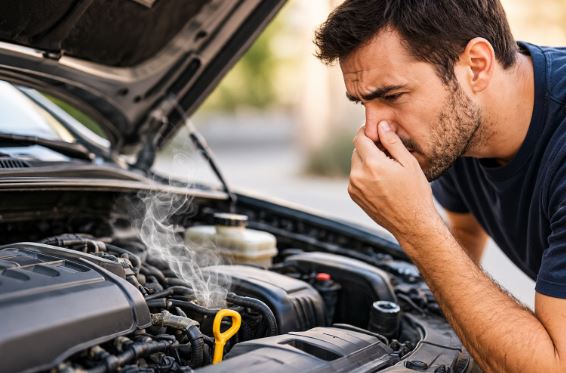
A fuel smell in your car should not be ignored. It may be residue from filling the tank, but it can also point to leaking fuel, escaping vapour or an engine that is not burning fuel correctly. Because petrol vapour is flammable, the safest response depends on where the smell appears and whether you can see liquid.
If the smell is strong, you see a fuel leak, the car is running badly or anyone feels dizzy, switch the engine off in a safe, open place. Keep flames and sparks away and arrange assistance. Do not drive the car to our Croydon workshop simply because it still starts.
When the smell is mild and temporary after refuelling, check that the cap is secure and that fuel was not spilled on the bodywork. If it remains, returns or enters the cabin, call us on (03) 9839 8920 and describe exactly what you have noticed.
First, work out when the smell appears
The timing gives us useful clues. A smell immediately after filling up may relate to a spill, cap, filler neck or vapour-control system. A smell during a cold start may come from rich running, a misfire or a leak that is more noticeable before the engine warms.
A smell inside the cabin while driving deserves prompt attention. Air can enter through the ventilation intake, floor openings or the rear of the vehicle. The source may be under the bonnet, beneath the car or around the tank rather than inside the cabin itself.
Tell us whether the smell appears with a full tank, only when parked, under acceleration or after the engine is switched off. Those details help us choose where to test first.
Is a brief smell after refuelling normal?
A small amount of vapour around a service station is common. Fuel can also remain on your shoes, hands or the paint near the filler. That smell should fade once the spill evaporates and you leave the area.
It is not normal for a strong petrol smell to remain inside the car, for liquid to drip under the vehicle or for the smell to return every time the tank is full. Do not keep topping the tank after the pump clicks off. Overfilling can push liquid fuel into parts of the evaporative-emissions system designed to handle vapour.
Check that the cap is fitted correctly if your car uses a removable cap. A damaged seal or capless filler fault can also allow vapour to escape and may trigger a warning light.
Common causes of a fuel smell
A loose or damaged fuel cap
The cap seals the fuel system. If it is loose, cross-threaded or has a damaged seal, vapour can escape. Modern cars may detect the pressure loss and store an evaporative-emissions fault.
Tightening a loose cap may solve the cause, but a warning light may not disappear immediately. If the smell continues, the cap should not be assumed to be the only issue.
A leaking hose, pipe or connection
Fuel travels from the tank to the engine under pressure. Rubber hoses, plastic lines, metal pipes, seals and quick-connect fittings can deteriorate or be damaged. Even a small leak can produce a strong smell.
Never search for a petrol leak with a flame. Do not crawl under a vehicle on a roadside or rely on a jack. A workshop can inspect the system safely and pressure-test it where appropriate.
Injector or fuel-rail leakage
Modern direct-injection engines operate at high fuel pressure. A damaged injector seal, line or rail connection can release fuel or vapour under the bonnet. Some faults are most obvious during a cold start; others appear only while the engine is running.
European vehicles require the correct procedures and replacement seals when high-pressure components are disturbed. We check for visible leakage, stored faults and pressure behaviour before recommending parts.
An evaporative-emissions fault
The evaporative-emissions system captures fuel vapour instead of releasing it to the air. It uses hoses, valves, a charcoal canister and pressure monitoring. A split hose, saturated canister or faulty purge valve can cause a smell and warning light without a liquid leak.
A smoke test can help locate small vapour leaks. Scan data can also show whether the purge valve and pressure monitoring are behaving as expected.
A misfire or rich fuel mixture
If fuel enters a cylinder but does not burn properly, unburnt fuel can pass into the exhaust. You may smell it near the tailpipe and notice rough running, poor acceleration or a flashing check-engine light.
Do not continue driving with a flashing engine light. Active misfire can overheat and damage the catalytic converter. We need to establish whether the cause is ignition, fuel delivery, compression or another control fault.
Exhaust entering the cabin
Drivers sometimes describe exhaust as a raw-fuel smell. A leaking exhaust joint, cracked component or body sealing problem can allow fumes into the cabin. Exhaust gases can contain carbon monoxide, which has no smell and can cause serious illness.
If anyone develops headache, nausea, weakness or dizziness, move into fresh air and seek medical advice. Do not continue using the vehicle until it has been assessed.
Petrol and diesel smells are not the same
Petrol evaporates readily and its vapour ignites easily. A petrol leak requires particular caution. Diesel is less volatile, but a diesel leak can still damage hoses and mounts, contaminate the road and create a fire risk on hot components.
Diesel injector seal failure can also produce a different smell, sometimes with a chuffing sound or black, tar-like deposits around an injector. Fuel return lines and filter housings are other possible leak points.
AdBlue has its own sharp smell and forms white crystals when it dries. It is stored separately from diesel. Identifying the fluid correctly matters because the repair paths are different.
Fuel smell inside the cabin: where can it enter?
The ventilation system draws air from outside near the base of the windscreen. Vapour under the bonnet can therefore enter when the fan is operating. Openings around wiring, damaged body seals or a poorly sealed access cover can provide other paths.
On vehicles where the fuel tank or pump access sits beneath the rear seat, a damaged seal may make the smell stronger in the back of the cabin. Estates and hatchbacks can also draw fumes from the rear if tailgate seals or exhaust components are damaged.
Opening the windows may reduce the smell, but it does not repair the source. We inspect the vehicle with the circumstances you described in mind.
What should you do immediately?
1. Pull over safely if the smell is strong or the vehicle is running badly.
2. Switch off the engine and keep ignition sources away.
3. Move passengers into fresh air.
4. Do not restart the vehicle if fuel is visibly leaking.
5. Call for roadside or towing assistance when there is any doubt.
If fuel has spilled at a service station, notify the operator. They have procedures and materials for dealing with spills safely.
EPA Victoria provides information about reporting pollution and fuel spills, while VicRoads publishes current vehicle safety and roadworthiness information. Those resources do not replace mechanical diagnosis, but they explain the wider safety and environmental responsibilities.
How we diagnose a fuel smell
We begin with your description. The location, timing, tank level and recent work all matter. We then inspect the vehicle without creating an ignition source.
Depending on the symptoms, we may scan the engine and emissions modules, inspect lines and connections, check fuel pressure behaviour and test the evaporative system. A smoke machine can introduce visible, low-pressure smoke into an appropriate sealed system to reveal a small vapour leak.
If the engine runs roughly, we review misfire counts, fuel-trim data, injector behaviour and ignition components. A fault code helps identify the system involved, but we confirm the physical cause before replacing a part.
Our diagnostic and fault-finding service is built around that sequence. We explain what we found and obtain your approval before repair work begins.
Why guessing can become expensive
Replacing a fuel cap because an evaporative code appeared may work, but it may also leave a split hose or failed valve untouched. Replacing injectors because the exhaust smells rich may miss an ignition coil or sensor fault.
The opposite mistake is dismissing the smell because no warning light is on. A mechanical leak may not be detected by the engine computer. The absence of a dashboard warning does not prove the system is sealed.
We prefer evidence. If the fault can wait, we will say so. A confirmed fuel leak is not an item we will advise you to postpone.
Can regular servicing prevent fuel smells?
Servicing cannot prevent every seal or component from failing, but it gives us a chance to inspect visible lines, note perished hoses and investigate stored faults. Correct installation matters whenever a fuel filter, injector or high-pressure line is serviced.
Our repair and maintenance work covers European vehicles including BMW, Mercedes-Benz, Audi, Volkswagen and Porsche. We use the procedure and parts appropriate to the vehicle rather than treating every fuel system as identical.
Owners should also check for current safety recalls. The Australian Government’s vehicle recalls database allows searches by vehicle details and VIN where supported. Recall work is normally handled through the manufacturer’s authorised network.
What information helps when you call?
Tell us whether the car uses petrol or diesel, when the smell began and where it is strongest. Mention warning lights, rough running, recent refuelling, a recent service or any visible fluid. If the vehicle is unsafe to drive, say so at the start of the call.
Photos of a visible stain may help, but do not put yourself under the car or touch an unknown fluid. We would rather arrange a safe inspection than ask you to perform a risky check.
Book a fuel-smell diagnosis in Croydon
A persistent fuel smell needs a cause, not an air freshener. We will inspect the system, explain the evidence and tell you what needs attention now. We have worked on European vehicles for more than 30 years from our family-owned Croydon workshop.
Call us on (03) 9839 8920. If the car is safely parked and the matter is not urgent, you can send us the symptoms and vehicle details here and ask us to call you.
Frequently asked questions
A spill, loose cap, damaged filler seal or evaporative-system fault may be involved. If the smell does not fade quickly or returns with a full tank, have it checked.
The absence of a visible leak does not rule out escaping vapour or exhaust. If the smell is strong, enters the cabin or comes with poor running, stop and seek advice.
No. Some evaporative and mixture faults trigger a light, but a mechanical leak may not be detected electronically.
Unburnt fuel can reach the exhaust during a misfire or rich-running condition. A flashing engine light or rough running makes the issue more urgent.
We can inspect and test the system, using scan data and smoke testing where suitable. The method depends on the vehicle and the area suspected.