
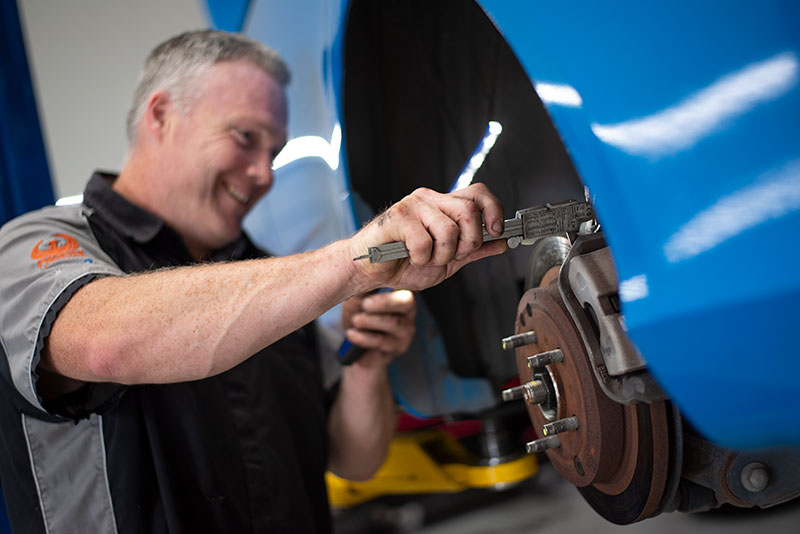
Air suspension is meant to give your BMW or Mercedes a smooth, adjustable ride. It’s the tech behind Mercedes AIRMATIC and BMW’s air suspension system on models like the X5 and X7.
But when it fails, the ride quality goes downhill fast. You might notice sag on one side, a harsh bump over every pothole, or a warning light you’ve never seen before.
Air suspension faults are common on higher-km European vehicles. And they rarely fix themselves. Left alone, a small air spring leak often turns into a compressor failure or a full system overhaul.
This guide covers the warning signs, the usual causes, and what drives repair cost up or down. Exact pricing depends on your model and the extent of the damage, so always confirm current figures with your workshop before you commit to a repair.
What Is Air Suspension (and Why BMW & Mercedes Use It)?
Air suspension replaces traditional coil springs with air-filled bags, or air springs. A compressor fills these bags with compressed air. Sensors and a control module then adjust ride height and stiffness automatically.
The result is a controlled ride that can soften over speed humps and firm up on the highway. It’s one of the reasons drivers choose these brands in the first place.
- Mercedes-Benz uses AIRMATIC and, on higher-end models, Active Body Control.
- BMW fits air suspension to the rear axle of the X5, X7, and some 7 Series variants.
- Audi and other luxury vehicles equipped with air suspension use similar systems.
These setups are popular in luxury vehicles because they smooth out uneven road conditions. That matters in Melbourne’s mix of smooth freeways and pothole-riddled side streets. The trade-off is more components that can wear out over time, especially once a car passes the 100,000km mark.
Traditional steel springs don’t have this complexity. They’re simpler, and they don’t fail in quite the same way. But they also can’t adjust ride height on the fly, which is exactly why manufacturers moved to air suspension on their flagship SUVs and sedans.
Common Signs of Air Suspension Faults
Air suspension issues tend to show up gradually. Catching them early can mean the difference between a single air spring replacement and a full system overhaul.
- Car Sitting Lower on One Side or Sagging Overnight
This is usually the first sign of a slow leak. Air escapes from a strut overnight, so the car sags by morning. Some owners notice it only after parking on a flat driveway for a few days.
- Bouncy or Unusually Stiff Ride
A worn air spring can’t hold pressure evenly. That means a bouncier ride, or, in some cases, a suspension that feels stiff and unresponsive. Either way, it’s a change from how the car normally handles Melbourne’s roads.
- Suspension Warning Light on the Dash
A malfunction in the sensor, valve, or control module usually triggers a dash warning. Don’t ignore it. It’s the car telling you something in the system needs diagnostics, even if the ride still feels okay for now.
- Compressor Running Constantly or Making Noise
If the air compressor keeps cycling to compensate for a leak, expect a whining or grinding noise from somewhere near the boot or rear wheel arch. Constant running shortens the compressor’s life significantly, so this symptom tends to get expensive if it’s ignored.
- Clunking or Knocking Over Bumps
This can point to a failing valve block or worn mounts, not just the air spring itself. It’s worth getting a proper diagnosis rather than guessing, since the fix is very different depending on the source.
- Uneven Tyre Wear From Ride-Height Issues
When the ride height is wrong for too long, tyres wear unevenly on one side. Our team has covered this pattern before in relation to general suspension problems, and it’s one of the easier warning signs to spot during a routine service.
What Causes Air Suspension Faults in BMW & Mercedes?
Most air suspension failures come down to age, mileage, and exposure to the elements. Australia’s vehicle fleet is getting older on average, which means more owners are now dealing with wear-related suspension issues. The average age of registered vehicles nationally reached 11.4 years in 2024-25, according to IBISWorld. That’s more time for rubber components to perish and electronics to age, particularly on cars that spend a lot of time parked outdoors.
Common causes include:
- Air strut or air spring leaks. The most frequent fault. Rubber perishes with age and road salt exposure, and small leaks are often the earliest sign of trouble.
- Compressor failure. Constant cycling from a slow leak burns out the air compressor early. Once a compressor fails, the whole system usually stops adjusting properly.
- Faulty height sensors. These tell the system where the car is sitting. A faulty sensor sends bad data, and the car overcorrects, sometimes sitting too high on one side and too low on the other.
- Corroded air lines or connectors. Common on vehicles that see a lot of coastal or wet driving conditions, where salt and moisture work their way into fittings over time.
- Valve block issues. The valve block distributes air to each corner. When it sticks or fails, one corner can sit wrong while the others sit fine, which can look confusing if you’re not familiar with how the system works.
Mileage plays a role, too. Cars with low mileage but high age can still develop faults, since rubber components degrade with time as much as with use. Road conditions matter as well: cars that regularly hit speed humps, potholes, or gravel driveways put more strain on struts and sensors than cars that mostly stick to smooth highways.
How Much Does Air Suspension Repair Cost?
Repair cost depends on which component has failed and whether OEM or aftermarket parts are used. We’re not going to guess at figures here. Instead, use this table as a guide to what typically drives the price, and confirm exact costs with your workshop.
| Repair Type | Typical Cost Driver |
| Single air spring or strut replacement | Parts brand (OEM vs aftermarket), labour time |
| Compressor replacement | Access difficulty, part availability |
| Height sensor replacement | Diagnostic time, calibration after fitting |
| Full air suspension conversion (coilover) | Kit quality, labour for conversion |
Ask your Melbourne workshop for a written quote before any work begins. Pricing varies by model, mileage, and part sourcing.
As a general point of reference, luxury brands make up a growing share of Melbourne’s roads. BMW led Australia’s luxury segment with 26,842 sales in 2025, ahead of Mercedes-Benz on 22,850 sales, according to carsales business data. More of these vehicles on the road means more demand for specialist air suspension diagnostics and repair, and more workshops building genuine experience with these systems.
One thing worth flagging: dealership pricing and independent European specialist pricing can differ quite a bit for the same job. That gap usually comes down to labour rates and how parts are sourced, not the quality of the repair itself. It’s worth getting a quote from both before deciding.
Should You Repair or Convert to Coilovers?
This is a decision worth making with your workshop, not one to rush.
- Repairing the factory system keeps the original ride comfort and height adjustment the car was designed for. It’s the better option if you plan to keep the car for a while and want it driving as intended.
- Converting to coilovers swaps air suspension for traditional steel springs. It’s often a more cost-effective option long-term on high-mileage cars, but it changes ride quality and removes the automatic height adjustment feature.
Neither option is automatically “better.” It depends on how long you plan to keep the car, your budget, and how much you value the factory ride feel. Some owners with older, high-km vehicles choose conversion simply to avoid repeat air suspension issues down the track. Others prefer to keep the car as close to original spec as possible, especially if resale value matters to them.
Why Choose a BMW & Mercedes-Benz Specialist for Air Suspension Repairs
Air suspension diagnostics on European vehicles isn’t like a standard mechanic job. It calls for manufacturer-specific tools and know-how.
A specialist workshop typically offers:
- Diagnostic scanners built for AIRMATIC and BMW air suspension fault codes
- Correct calibration after strut or sensor replacement
- Familiarity with common failure points on specific models, like the BMW X5
- Experience in troubleshooting, diagnosing and repairing faults across a range of luxury vehicles, not just one brand
Arnpro is a European car specialist based in Croydon, servicing BMW, Mercedes-Benz, and other marques across Melbourne. Our team runs proper diagnostics before recommending any repair, so you’re not paying to replace parts that aren’t actually the problem. That matters with air suspension, especially since a sensor fault and a leaking strut can sometimes present with similar symptoms.
If your BMW or Mercedes is showing any of the signs above, book a car service in Croydon and get it checked properly before a small issue turns into a costly repair.
FAQs
It usually means a sensor, valve, or air pressure fault has been detected. Get it scanned as soon as you can.
Short trips are usually fine, but don’t delay a proper diagnostic. Faults tend to get worse, not better.
It depends on your vehicle’s age and warranty terms. Check your logbook or ask your dealer.
Most single-component repairs take a day. Full conversions or complete system replacement can take longer.
No. It’s mainly fitted to SUVs like the X5 and X7, plus some 7 Series and S-Class variants. Check your model specs if you’re unsure.