
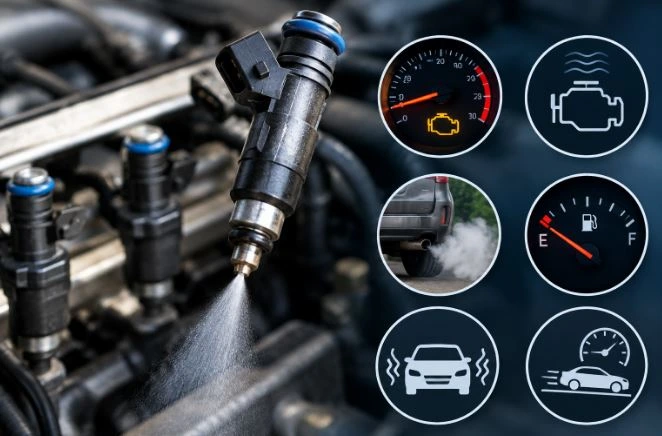
Fuel injector fault symptoms in European cars often look like ignition or airflow problems. A rough idle, hesitant acceleration, misfire, difficult start or increased fuel use can involve an injector, but those signs do not prove it. Replacing injectors without testing can be an expensive way to leave the real fault untouched.
At our Croydon workshop, we diagnose the complete combustion problem. We read the vehicle’s data, identify which cylinder is affected and test whether the cause is fuel delivery, spark, compression, wiring or control. If an injector is serviceable, we will not sell you another one.
What does a fuel injector do?
A fuel injector meters fuel into the engine at a precise time. The engine computer decides how long it opens based on temperature, load, air entering the engine and feedback from several sensors.
Port-injection systems spray fuel into the intake before it reaches the cylinder. Direct-injection petrol and diesel systems deliver fuel into the combustion chamber at much higher pressure. Many modern BMW, Audi, Volkswagen, Mercedes-Benz and Porsche engines use direct injection, while some newer engines combine port and direct injection.
The injector needs to open, close and produce the correct spray pattern. It can fail electrically, become restricted, leak, stick or suffer a sealing problem. Each fault changes the symptoms and the right repair.
The most common fuel injector fault symptoms
- Rough idle
An injector that delivers too little or too much fuel can make one cylinder contribute unevenly. You may feel a vibration through the seat or steering wheel while the car is stationary.
Rough idle can also come from an ignition coil, spark plug, vacuum leak, carbon build-up, engine mount or compression problem. We compare cylinder data rather than assuming fuel is responsible.
- Misfire under acceleration
A restricted injector may cope at idle but fail to deliver enough fuel under load. The engine can hesitate, jerk or record a cylinder-specific misfire.
A weak ignition coil often behaves in the same way. Swapping or testing components in a controlled sequence helps separate ignition from fuel delivery.
- Difficult hot or cold starting
A leaking injector can allow fuel into a cylinder after the engine stops, creating an over-rich start. A restricted injector or pressure fault may cause extended cranking before enough fuel reaches the engine.
Temperature matters. Tell us whether the problem occurs first thing in the morning, after a short stop or in both situations.
- Higher fuel consumption
An injector that leaks or delivers a poor spray pattern can waste fuel. The engine computer may also add fuel to compensate for readings that appear lean.
Tyre pressure, short trips, thermostat faults, oxygen sensors and many other issues affect consumption. A change at the bowser is a reason to investigate, not enough evidence to order injectors.
- Fuel smell or smoke
Unburnt fuel may create a smell at the exhaust. Petrol engines can produce dark exhaust deposits; diesel engines may produce black smoke when combustion lacks enough air or fuel delivery is incorrect.
Visible fuel around the engine or a strong smell requires caution. Switch the car off and seek advice, particularly if liquid is leaking.
- Engine warning light
The engine computer may record misfire, mixture, injector-circuit or fuel-pressure faults. The wording tells us which condition it detected. It does not automatically identify the failed part.
A flashing engine light indicates an active misfire and should be treated as urgent. Continuing to drive can overheat the catalytic converter.
Electrical, mechanical and sealing faults
An electrical injector fault may involve the injector coil, wiring, connector or engine computer driver. We test the circuit rather than replacing the injector solely because its cylinder is named in a code.
A mechanical fault includes restriction, sticking or internal leakage. Deposits can affect the spray pattern, while internal wear can stop the injector from sealing correctly.
Injector sealing faults occur around the injector rather than inside it. Direct injectors use model-specific seals and installation procedures. A failed diesel copper washer can allow combustion gas to escape, often creating a chuffing sound and hard black deposits. A damaged petrol injector seal may cause air or fuel leakage.
Petrol and diesel injector symptoms differ
Petrol direct injectors operate under high pressure and must atomise fuel finely. Problems may show as cold-start misfires, fuel smell, rough idle or mixture faults. Carbon on intake valves can create very similar symptoms even when the injectors work correctly.
Common-rail diesel injectors use much higher pressure and return a controlled amount of fuel to the tank. Excessive return flow can reduce available rail pressure and cause hard starting or power loss. Poor spray can produce diesel knock, smoke and uneven running.
The test method must suit the system. A technique appropriate for a port-injected petrol engine may not answer the same question on a common-rail diesel.
Why code reading is not injector testing
A fault code might say that cylinder three is misfiring. Cylinder three could have a weak coil, worn plug, injector fault, intake leak, compression loss or wiring problem. The computer reports the result it observed.
We use European-capable scanning equipment to view misfire counters, mixture corrections, fuel pressure and other relevant live data. We then carry out physical or electrical tests to prove the cause.
Our diagnostic and fault-finding service goes beyond clearing codes. We want the evidence to lead to the repair, not the other way around.
How we test fuel injectors?
The exact process depends on the vehicle and symptoms, but it often begins with a full scan and visual inspection. We check whether one cylinder or several cylinders are affected and whether the fault happens at idle, during start-up or under load.
Ignition testing may come next on petrol engines because coils and plugs are common misfire causes. Compression or leak-down testing helps identify a mechanical cylinder problem. Intake smoke testing can find unmetered air that changes the fuel mixture.
Injector electrical testing checks the control circuit and component response. Balance or contribution tests compare cylinder behaviour. Fuel-pressure data shows whether the high- and low-pressure supplies are meeting demand.
On suitable diesel systems, a return-flow test compares leakage from each injector. Significant variation can identify an injector that cannot maintain pressure. Bench testing may be required for spray pattern, delivery quantity or internal leakage that cannot be confirmed on the car.
We choose the tests needed to answer the question. Performing every possible test would add cost without necessarily adding value.
Can injectors be cleaned?
Sometimes. Cleaning can help an injector affected by deposits, provided its electrical and mechanical condition is otherwise sound. It will not repair a damaged coil, worn internal component, cracked body or failed seal seat.
Fuel-tank additives are not a substitute for diagnosis. A suitable product may help keep a clean system clean, but it cannot correct every restriction and may not be approved for every fuel system.
Direct injectors may require removal and specialist bench cleaning to assess delivery and spray. We explain whether cleaning is a reasonable option or whether testing shows replacement is justified.
Does one failed injector mean replacing all of them?
Not automatically. The decision depends on test results, age, system type, contamination and manufacturer procedure. Replacing a complete set without evidence can create a large unnecessary bill.
There are situations where related work makes sense. If contamination has affected the fuel system, replacing one damaged injector without addressing the source may lead to another failure. Diesel systems can require inspection of the pump, rail and tank for metal or water contamination.
We explain the scope before proceeding. If only one injector has failed and the others test correctly, we will say so.
What causes injector faults?
Contaminated fuel, water, fine debris and internal wear can damage injectors. Deposits may build where heat acts on fuel residue. Electrical connectors and wiring can also deteriorate or be damaged during other work.
On diesel engines, high-pressure pump wear can spread fine metal through the system. That is a system fault, not four unrelated injector failures. On direct-injection petrol engines, heat and deposits can affect spray quality over time.
Missed fuel-filter replacement can increase the chance of contamination reaching sensitive components where a serviceable filter is part of the manufacturer’s schedule. The correct filter and installation procedure matter.
Can you keep driving?
A slight rough idle should be booked for diagnosis before it worsens. Limit driving if the car is misfiring, losing power or producing smoke.
Stop driving if the engine light flashes, fuel visibly leaks, the oil level rises unexpectedly, the engine knocks heavily or the car enters severe limp mode. Fuel can damage the catalytic converter, dilute engine oil or create a fire risk depending on the fault.
VicRoads publishes current roadworthiness and vehicle-safety information. The Australian Government also maintains a vehicle recalls database for safety-related manufacturer campaigns. A recall search is sensible, although most wear and diagnostic faults are not recalls.
How regular servicing helps
Correct oil, filters, spark plugs and scheduled inspection give the engine the best chance to run as designed. Servicing can also reveal stored faults or mixture changes before the driver notices a severe misfire.
Our European car repair and maintenance service covers routine work and fault-related repairs. We follow the vehicle’s requirements and keep the explanation plain. If a part does not need replacing, we will not recommend it.
Good service history also helps diagnosis. Knowing when plugs, filters or previous injectors were fitted prevents repeated work and gives us context for the current fault.
What should you tell us when booking?
Describe when the symptom occurs and whether it changes with engine temperature or load. Tell us which warning appears, whether fuel use has changed and whether you can smell fuel.
Bring any recent invoices if the vehicle has already had coils, plugs, sensors or injectors replaced. Do not clear the fault codes immediately before the appointment if the vehicle remains safe to drive.
Book injector diagnosis in Croydon
Fuel injector fault symptoms in European cars need testing because several common faults feel almost identical from the driver’s seat. Our fuel injector fault symptoms in European cars assessment isolates the cause, explains what the results mean, and gives you a clear recommendation before any repair.
We have more than 30 years of experience with European vehicles at our family-owned Croydon workshop. Call us on (03) 9839 8920 or send us your vehicle details and symptoms so we can arrange a diagnostic booking.
Frequently asked questions
It can. Excess fuel may dilute oil or overheat the catalytic converter, while insufficient fuel can create poor combustion. The risk depends on the type and severity of the fault.
Only if deposits are genuinely the cause and the product is suitable. A misfire can involve ignition, compression, air leaks or electrical faults, so diagnosis comes first.
We combine scan data with cylinder, electrical, pressure, contribution or return-flow testing as appropriate. A cylinder number in a fault code is not proof by itself.
No. We base the recommendation on test results, system condition and manufacturer procedure rather than a blanket rule.
Yes. Both can cause rough running and cylinder-specific misfire. That is why we test ignition and fuel delivery before ordering parts.