
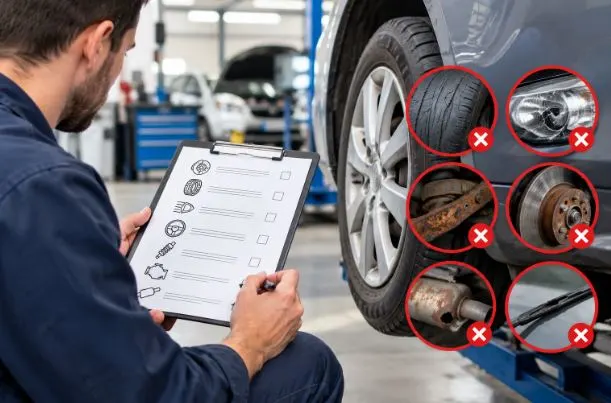
A vehicle can fail a roadworthy certificate inspection in Victoria when safety-related items do not meet the required standard. Common inspection areas include tyres and wheels, brakes, steering and suspension, lights, windscreens and windows, seats and restraints, the vehicle structure, and other equipment affecting safe use.
The exact result depends on the vehicle and its condition at inspection. This article is a practical overview, not a substitute for the current VicRoads requirements or an inspection by a licensed vehicle tester. If you need a roadworthy in Croydon, arrange the inspection early enough to deal with any repairs before your sale or transfer deadline.
What does a Victorian roadworthy inspection cover?
VicRoads describes a certificate of roadworthiness as evidence that a vehicle is safe enough to be used on public roads. It is commonly required when a registered vehicle is sold or transferred, or as part of clearing certain defect notices.
The inspection focuses on safety-related conditions. It does not certify that the vehicle is mechanically perfect, reliable for years to come or free from every developing fault. It also does not replace a pre-purchase inspection for somebody deciding whether the vehicle is a sound purchase.
Always check the current VicRoads certificate of roadworthiness information, because requirements and processes can change. A licensed tester applies the standards to the particular vehicle.
Tyres and wheels
Tyres connect every steering and braking input to the road, so their condition receives close attention. Problems can include insufficient tread, damage, exposed cords, unsuitable tyres, or combinations of tyres and wheels that do not comply with requirements.
Check all road wheels, not only the easiest ones to see. Turn the steering where safe so you can view more of the front tyre surfaces. Uneven wear on an inner edge may be missed during a quick walk around and can also point to an alignment or suspension issue that needs investigation.
Look for cuts, bulges, cracking and objects embedded in the tread. Confirm tyre sizes and load or speed specifications are appropriate for the vehicle. Modifications to wheels or suspension can affect compliance and should be discussed with the tester rather than assumed acceptable.
Tyre pressure alone does not determine whether a tyre passes, but correct inflation helps you inspect it and drive safely to the appointment. If a tyre is visibly damaged, do not rely on adding air to make it suitable.
Brakes
A roadworthy inspection assesses braking components and operation. Worn friction material, fluid leaks, damaged components, poor operation or an ineffective parking brake can all require attention.
Drivers sometimes become accustomed to gradual changes. A longer pedal, pulling under braking, vibration, noise or a parking brake that needs excessive travel deserves inspection before the roadworthy appointment. Warning lights should not be ignored or cleared without diagnosing the cause.
Visual checks at home are limited. Brake condition can require measurement and access to components that are not safely inspected in a driveway. If you suspect a braking fault, arrange professional assessment rather than waiting for the certificate inspection to identify it.
Steering and suspension
Steering and suspension keep the vehicle controllable and the tyres in contact with the road. Excessive wear or looseness, damaged components, leaks and insecure mountings may affect roadworthiness.
Symptoms can include knocking over bumps, wandering, uneven tyre wear, unusual steering play or the vehicle sitting unevenly. These symptoms do not identify one certain fault. They indicate that the system needs proper inspection.
Modified suspension deserves particular care. A vehicle may look and drive acceptably while a modification or component does not meet the applicable requirements. Bring documentation for approved modifications and ask the licensed tester what is required for the vehicle.
Lights, indicators and electrical safety items
Headlights, brake lights, tail lights, indicators, number-plate lights and other required lamps need to work correctly and be secure. Lenses should not be damaged in a way that affects their function, and lamps need to display the appropriate colour and aim.
Test lights with another person before the appointment. Do not forget the high-mounted brake light, hazard lights and number-plate illumination. A failed globe can be simple, but repeated failures or intermittent operation may indicate an electrical fault.
Dashboard warning lamps can also matter because they may identify faults in safety systems. Do not disconnect a light or clear a code merely to remove the warning. A proper diagnostic and fault-finding assessment addresses the cause and allows the tester to assess the vehicle accurately.
Windscreen, windows, mirrors and washers
The driver needs an adequate view of the road. Windscreen damage, severe scratching, discolouration or unauthorised tinting may affect compliance depending on location and extent. Mirrors must provide the required view and be securely mounted.
Check the windscreen washers and wipers. Worn blades that smear water can reduce visibility even when they still move. Fill the washer reservoir with a suitable product and inspect the spray pattern.
Window operation and tint should be considered too. Rules can apply to light transmission and where tint is fitted. If the vehicle has an aftermarket windscreen strip or dark tint, ask the tester to assess it against current requirements.
Seats, seatbelts and restraints
Seats need to be secure, and required seatbelts must be present, accessible and functioning. Frayed webbing, damaged buckles, belts that do not retract properly or warning systems indicating a fault should be addressed.
Remove clutter so every belt and buckle can be inspected. If seats have been changed or removed, confirm the vehicle’s seating configuration and modification requirements. Child restraints are a separate item used by the owner, but the vehicle’s anchor points and related equipment must remain in suitable condition where required.
Do not attempt repairs to a restraint system without appropriate expertise. Seatbelts and airbag-related systems are safety components, and warning lights need diagnosis.
Body, chassis and structural condition
Serious rust, accident damage, insecure panels, sharp projections or structural repairs can affect roadworthiness. The relevant question is not whether a scratch looks unattractive. It is whether condition or repair affects safety and compliance.
Inspect lower panels, mounting areas and visible structural points, particularly on an older vehicle. Look beneath mats in accessible areas for moisture or corrosion, but do not dismantle the vehicle.
Evidence of previous repair is not automatically a failure. The quality and safety of that repair matter. If you know the vehicle has had structural work, bring available repair and engineering documentation to the discussion.
Leaks, exhaust and other components
Fluid leaks can create safety or environmental concerns and may indicate a component needs repair. A small mark on the driveway does not reveal the source or severity, so have it traced.
The exhaust system should be secure and free from defects affecting safe operation. Excessive noise, visible damage, fumes or poorly supported sections warrant attention. Emissions-related equipment and vehicle modifications must meet applicable rules.
Other items can include doors, latches, the bonnet, controls, speedometer and number plates. The inspection is broader than the handful of faults owners commonly notice. A licensed tester must examine the vehicle against the required standards.
Will a warning light fail a roadworthy?
It depends on the warning and the underlying system. A warning relating to brakes, airbags, stability control or another safety system should be investigated. The correct response is diagnosis, not hiding the light.
Modern vehicles store fault information that can help a technician understand why a warning appeared. A code is a starting point, not always a complete diagnosis. Testing may be needed to distinguish a failed component from damaged wiring, low voltage or another cause.
Arnpro provides auto electrical and diagnostic work in Croydon. If a warning light or intermittent electrical symptom is present, describe when it occurs and whether any recent battery, repair or accessory work preceded it.
What modifications can cause problems?
Suspension changes, non-standard wheels and tyres, lighting, exhaust changes, seating alterations and body modifications can all raise compliance questions. The rules vary according to the change and vehicle.
Do not rely on the seller of a part saying it is “road legal” in every installation. Ask whether approval, certification or engineering documentation applies. VicRoads provides information on vehicle standards and modifications, which should be read alongside advice for the particular vehicle.
If documentation exists, bring it to the inspection. If it does not, raise the modification when booking so the tester can explain what information is needed.
How should you prepare for the inspection?
Start with ordinary checks rather than trying to conduct your own roadworthy assessment:
1. Test the exterior lights, indicators, horn, washers and wipers.
2. Inspect tyres for visible damage and uneven wear.
3. Check that every seatbelt latches, retracts and is accessible.
4. Note warning lights, leaks, noises and known faults.
5. Remove belongings that block access to seats, belts or the spare-wheel area.
6. Bring modification and repair documents.
7. Confirm the vehicle identification and registration details.
Cleaning the vehicle can make inspection easier, but presentation cannot compensate for a safety defect. Tell the tester about known problems rather than hoping they will not appear.
What happens if the vehicle does not pass?
The tester should provide information about the items that need attention and the applicable process. Ask for each defect to be explained in plain language and obtain a repair scope before authorising work.
Time limits and reinspection arrangements are governed by the current Victorian process. Confirm them with the tester and VicRoads rather than relying on an old article or advice from a previous sale.
A failed first inspection does not mean the car is beyond repair. It means specified items must be addressed before a certificate can be issued. The cost and practicality depend on the faults found, which is why no generic price is responsible here.
Roadworthy inspection versus pre-purchase inspection
These services answer different questions. A roadworthy certificate addresses minimum safety-related standards for road use. A pre-purchase inspection helps a buyer understand mechanical condition, observed faults and possible maintenance needs before deciding to buy.
If you are selling, the required roadworthy process may be the immediate task. If you are buying, do not treat the seller’s certificate as a complete assessment of value or reliability. Consider Arnpro’s pre-purchase inspection service for that separate decision.
Book a roadworthy inspection in Croydon
If you are wondering what fails a roadworthy certificate in Victoria because you plan to sell or transfer a vehicle, arrange the inspection before the final handover. That leaves time to understand and address any defects through the proper process.
Arnpro Automotive is located at 18 Coolstore Road, Croydon. Call 03 9839 8920 to confirm roadworthy availability, the documents to bring and the correct booking process.
Frequently asked questions
1. Is a roadworthy certificate a full mechanical inspection?
No. It focuses on whether the vehicle meets relevant roadworthiness requirements. It does not guarantee reliability or assess every future repair need.
2. Does a scratch or dent fail a roadworthy inspection?
Cosmetic condition alone is not the point, but damage can matter if it affects structure, security, visibility or creates a safety issue. The tester must assess the actual damage.
3. Can I repair defects at a different workshop?
Ask the licensed tester about the current process, documentation and reinspection requirements before arranging work elsewhere.
4. How long is a Victorian roadworthy certificate valid?
Validity rules can change and depend on the applicable process. Check the current VicRoads information rather than relying on an old number reproduced online.
5. Will an old car automatically fail?
No. Age alone does not determine the outcome. The vehicle’s condition and compliance with the applicable standards are what matter.