
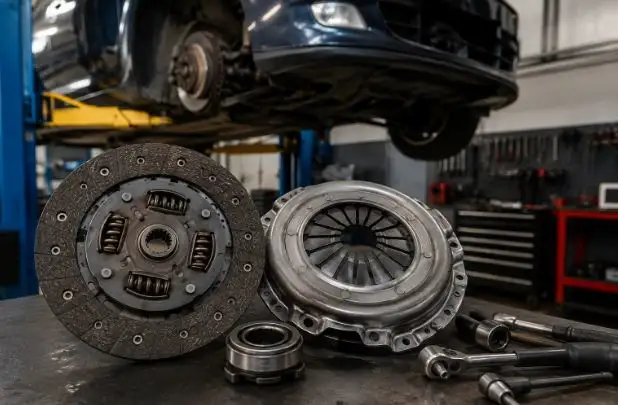
Clutch replacement cost depends on the vehicle, drivetrain layout, parts required and how much labour is needed to remove the gearbox. A straightforward clutch kit on one car can be a different job from a European model with a dual-mass flywheel, all-wheel drive, tight packaging or damage to related hydraulic components.
Arnpro Automotive does not publish one standard clutch price because it would not describe the work for a particular car. For a current quote in Croydon, call (03) 9839 8920 with the make, model, year, engine, transmission and symptoms. A proper estimate should state which parts are included and what could change after the gearbox is removed.
This guide explains those cost factors without inventing a price range that may not apply.
What does the clutch do?
In a manual car, the clutch connects and disconnects the engine from the gearbox. Pressing the pedal separates the engine’s power from the transmission so you can select a gear and stop without stalling. Releasing it reconnects the two through friction.
The main friction components are generally the clutch disc, pressure plate and release bearing. Many modern vehicles also use a dual-mass flywheel to absorb vibration. Hydraulic systems may include a master cylinder, slave cylinder and fluid lines.
When a clutch wears, the problem may be in one component or several related parts. Diagnosis matters because replacing only the obvious item can leave an old part that requires the same labour again soon afterwards.
Why clutch replacement is labour-intensive
The clutch sits between the engine and gearbox. Access usually requires the transmission to be disconnected and removed or moved far enough to reach the clutch assembly.
Depending on the car, the technician may need to remove or support:
- driveshafts or propeller shafts;
- exhaust sections;
- starter motor;
- gearbox mounts and crossmembers;
- parts of the subframe;
- hydraulic connections;
- linkages and wiring; and
- underbody covers.
The gearbox must then be correctly aligned during refitting. Fluids may need replacement, and manufacturer procedures can specify new single-use bolts or calibration steps.
Most of the labour is access and reassembly rather than unbolting the clutch itself. That is why a small difference in vehicle layout can materially change the quote.
The main parts in a clutch replacement
- Clutch disc
The disc has friction material that wears as it engages the flywheel. A worn disc can slip, causing engine speed to rise without a matching increase in road speed.
Contamination from oil can also make a disc slip or judder. If a seal is leaking, the cause needs attention before a new disc is fitted.
- Pressure plate
The pressure plate clamps the disc against the flywheel. Heat, wear or damaged springs can affect clamping force and pedal behaviour. It is commonly replaced with the disc as part of a matched kit.
- Release bearing
The release bearing operates when the pedal is pressed. A worn bearing may rumble or squeal, although noises around the bellhousing can have other causes.
Because access requires gearbox removal, installing a new bearing with the clutch kit is often sensible. Some vehicles use a concentric slave cylinder incorporating the release bearing, which changes parts cost and hydraulic work.
- Pilot bearing or bush
Where fitted, it supports the transmission input shaft. Wear can contribute to noise or engagement problems. Its condition should be checked while accessible.
- Flywheel
The flywheel provides the surface against which the clutch operates. A conventional solid flywheel may sometimes be machined if it remains within manufacturer limits. Cracks, heat damage or excessive wear can require replacement.
A dual-mass flywheel contains internal damping components. It cannot simply be treated like every solid flywheel. Excessive movement, noise, heat damage or grease leakage may indicate replacement. The correct assessment follows manufacturer specifications.
- Hydraulic components
The master and slave cylinders translate pedal movement into clutch operation. A leaking or failed hydraulic part can make gear selection difficult without the friction disc being worn.
Testing the hydraulic system before quoting a full clutch replacement can prevent unnecessary work. If a concentric slave cylinder is inside the bellhousing, replacement may be recommended while the gearbox is already out.
What changes clutch replacement cost?
- Make, model and engine
Parts, labour procedures and access vary. The same model family can have different engines, transmissions and clutch designs. A registration or VIN helps identify the correct components.
European cars often have tight packaging, model-specific fasteners and procedures, and dual-mass flywheels. That does not mean every European clutch is unusually difficult. It means the exact variant matters.
- Front-, rear- or all-wheel drive
On a front-wheel-drive car, the engine and transaxle are often mounted across the engine bay. Access can involve driveshafts and subframe components.
Rear-wheel-drive cars use a gearbox and propeller shaft layout that has different removal steps. All-wheel-drive systems can add transfer components and additional shafts.
Drivetrain layout therefore affects labour even when the basic clutch kit is similar.
- Dual-mass flywheel condition
The flywheel can be a large part of the total. It should not be replaced automatically without assessment, but neither should a worn unit be ignored to keep the initial quote low.
Ask whether the estimate assumes flywheel reuse, machining or replacement, and what measurements or signs will determine the decision once exposed.
- Original, OEM-equivalent or aftermarket parts
Different parts options may be available. The suitable choice depends on vehicle, intended use, availability and manufacturer requirements.
Ask for the brand and scope, not merely “clutch kit”. A kit may or may not contain a release bearing, bolts, alignment tool or hydraulic component. A low parts price can reflect fewer included items.
- Related leaks and damage
An engine rear main seal or gearbox input seal can contaminate the clutch. Replacing the disc without addressing an active leak risks another failure.
Broken mounts, worn linkages, damaged driveshaft boots or other accessible issues may also be found. The workshop should explain which work is necessary, which is sensible while access is open and which can wait.
- Fluids and single-use hardware
Gearbox oil, hydraulic fluid, coolant or other fluids may need draining or replacement depending on the procedure. Some manufacturers specify new bolts, seals, clips or nuts.
These items seem small compared with a clutch kit but belong in a complete estimate.
- Diagnostic time
Not every shifting problem is a failed clutch. Time spent confirming the cause can save a much larger unnecessary repair.
The technician may road-test the car, inspect hydraulics, check adjustment where applicable and listen for bearing, gearbox or flywheel noise. Scan data can help on vehicles where engine management, electronic parking brakes or other systems affect the procedure, but a diagnostic scan alone cannot measure clutch friction material.
A clutch quote comparison table
| Quote item | What to ask |
| Diagnosis | Has clutch failure been confirmed? |
| Clutch kit | Does it include disc, pressure plate and release bearing? |
| Flywheel | Is reuse, machining or replacement assumed? |
| Slave cylinder | Is it external or inside the bellhousing, and is it included? |
| Seals | What happens if an oil leak is found? |
| Fluids | Are gearbox and hydraulic fluids included? |
| Hardware | Are required single-use bolts and seals included? |
| Labour | Does it cover the vehicle’s exact drivetrain? |
| Calibration | Are adaptations or resets required and included? |
| Warranty | What parts and labour terms apply? |
This makes it easier to compare like with like. Two totals may describe different assumptions.
Signs a clutch needs inspection
- Engine revs rise without acceleration
This is a common sign of clutch slip. It may be most noticeable in a higher gear under load or going uphill. Continued slipping creates heat and can damage the flywheel.
- The bite point has changed
A clutch engaging very high or low can indicate wear, hydraulic trouble or adjustment issues. Bite point alone does not confirm the failed component.
- Difficulty selecting gears
If the clutch does not release fully, gears may be hard to select, particularly reverse or first while stationary. Hydraulic faults, linkage problems, gearbox wear and incorrect fluid can cause similar symptoms.
- Judder when moving away
Shaking or judder can come from clutch contamination, heat spots, flywheel condition, mounts or driving conditions. Inspection is needed before parts are ordered.
- Noise when pressing or releasing the pedal
Release bearings, pilot bearings, dual-mass flywheels and gearbox bearings can produce different noises. The point in pedal travel and whether the car is moving help narrow it down.
- A soft, heavy or sticking pedal
Hydraulic leakage, cable problems on older cars, release mechanism wear or pressure-plate issues can change pedal feel. If the pedal remains on the floor or gears cannot be selected safely, stop driving and arrange assessment.
Can you keep driving with a slipping clutch?
A mildly slipping clutch may still move the car, but slip tends to generate heat and usually worsens. It can leave you unable to accelerate or move away, and related flywheel damage may increase the eventual repair.
Avoid hard acceleration, towing and steep routes while arranging inspection. If the car cannot maintain speed safely, smells strongly of burning, will not select gears or has a pedal that fails, do not continue driving. Arrange towing.
Call Arnpro on (03) 9839 8920 if you are unsure whether the vehicle can be driven to the Croydon workshop.
Clutch fault or gearbox fault?
Because the symptoms overlap, Arnpro’s diagnostic and fault-finding service is the appropriate starting point before a gearbox is removed or a clutch kit is ordered.
Symptoms overlap. A gearbox with worn synchronisers may crunch in particular gears. Low or incorrect transmission fluid can affect shift quality. Linkages and mounts can produce movement or difficulty selecting.
A clutch may release poorly because of hydraulics rather than worn friction material. Engine or gearbox mounts can cause judder. A noisy dual-mass flywheel can be mistaken for internal engine or gearbox noise.
Diagnosis should identify the most likely cause before the gearbox is removed. Some confirmation only becomes possible after access, which is why a quote may contain clear contingencies.
Dual-mass flywheel versus solid flywheel
A dual-mass flywheel uses internal springs and damping to reduce drivetrain vibration. It is designed as part of the vehicle’s powertrain. A solid flywheel is a simpler single-piece design.
Conversion kits exist for some cars, but changing the design can alter noise, vibration and drivetrain loading. It is not automatically a better or cheaper long-term option. Use a kit only where appropriate for the vehicle and intended use, with the trade-offs explained.
For a standard road car, following the correct application and manufacturer guidance is generally the starting point.
How long does clutch replacement take?
The job can take much of a workshop day or longer depending on layout, parts availability and related findings. All-wheel-drive systems, subframe removal, seized hardware or a flywheel decision can add time.
Ask when diagnosis will occur, when parts can be confirmed and whether the car needs to remain overnight. Do not book around a generic online labour estimate for another model.
The workshop should contact you before completing work outside the authorised scope.
Can clutch life be extended?
Regular logbook servicing can identify fluid leaks, hydraulic changes and drivetrain symptoms, although a clutch is still replaced according to condition rather than a fixed interval.
Clutches are wear items, but driving habits and vehicle use affect lifespan.
Helpful habits include:
- take your foot fully off the pedal after changing gear;
- avoid holding the car on a hill using clutch slip;
- use the handbrake or brake while stationary;
- do not rest the car at traffic lights with the clutch unnecessarily depressed for long periods;
- select a suitable gear rather than forcing the clutch to compensate;
- avoid overloading or towing beyond the vehicle’s limits; and
- investigate oil leaks and hydraulic changes early.
City traffic, hills, towing and repeated low-speed manoeuvring naturally increase clutch use. Wear does not automatically mean the driver has done something wrong.
Performance and modified vehicles
Where increased torque is part of the problem, any performance modification and clutch choice should be considered together so the driveline suits the vehicle’s real use.
An engine tune can increase torque beyond the original clutch’s capacity. Track work, launches and heavy use also change heat and load.
An upgraded clutch may provide more capacity but can have a heavier pedal, sharper engagement or more noise. The right choice should reflect measured output and actual use, not simply the strongest advertised kit.
Tell the workshop about tuning and modifications before parts are ordered. A standard catalogue lookup may not reflect the car.
European vehicles and clutch diagnosis
Arnpro works with BMW, Mercedes-Benz, Audi, Volkswagen, Porsche and other European vehicles. These cars can use dual-mass flywheels, concentric slave cylinders and model-specific procedures.
The exact engine and gearbox code matters. For example, two Volkswagen Golfs of the same year may use different drivetrains. BMW and Audi variants can also differ across build dates.
Supplying the VIN helps confirm parts. Existing service records and details of previous clutch or flywheel work are useful.
What a responsible estimate should explain
A written estimate should identify the diagnosed fault, assumed parts, labour, fluids and foreseeable contingencies. It should say whether the flywheel has been allowed for and what happens if it cannot be reused.
The workshop cannot see every internal surface before gearbox removal. That uncertainty should be explained before work starts, not presented as a surprise afterwards.
At Arnpro, transparent communication means telling you what needs doing, what is sensible while access is open and what can wait. No unnecessary repairs are more useful than replacing every accessible part by default.
Book a clutch assessment in Croydon
If the clutch slips, judders, makes noise or changes pedal feel, diagnosis comes before a parts list. Arnpro Automotive provides car repair and maintenance services for European vehicles from its workshop at 18 Coolstore Road, Croydon.
Call (03) 9839 8920 with the make, model, year, registration or VIN and symptoms. We will explain what can be checked first and what information is needed for an accurate estimate.
Frequently asked questions
There is no single price because vehicle layout, clutch design, flywheel condition, hydraulics, parts and labour vary. Call Arnpro with the registration or VIN and symptoms for a current estimate. Ask which parts and contingencies are included.
Not automatically. The flywheel may be reused, machined where suitable, or replaced based on its design and condition. A dual-mass flywheel requires assessment against relevant specifications. The quote should explain its assumption.
If a concentric slave cylinder sits inside the bellhousing, replacement may be sensible while the gearbox is removed because a later failure repeats much of the labour. External components can be assessed differently. The workshop should explain the recommendation.
Engine speed rising without matching acceleration, particularly under load, is a common sign. A road test and inspection are needed because engine, transmission and hydraulic problems can produce related symptoms.
Friction wear often develops gradually, but hydraulic components, release mechanisms or springs can fail more abruptly. If the pedal drops, gears cannot be selected, or the car cannot move safely, stop and arrange assistance.
Follow the parts manufacturer and workshop advice. Generally, smooth normal driving and avoiding hard launches or excessive slip during the initial period allow friction surfaces to settle. The specific recommendation depends on the components.
No. A clutch is inspected and replaced based on symptoms, wear and condition rather than at a standard logbook interval. Routine servicing can identify leaks or changes, but it cannot predict an exact clutch lifespan.