
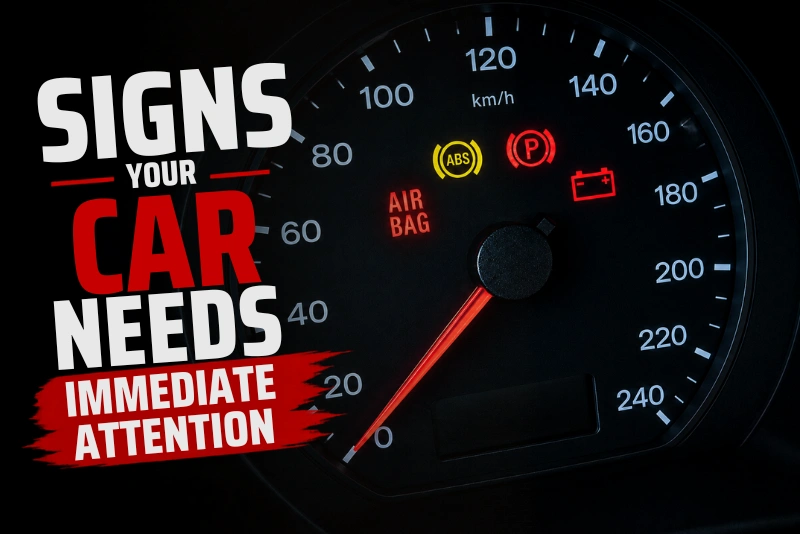
Your car is constantly communicating with you through various signals, sounds, and behaviours. Understanding these signs of car trouble can mean the difference between a minor repair and a major breakdown that leaves you stranded. Whether you’re dealing with strange noises in car operation or wondering when to service your car, this comprehensive guide will help you identify urgent car repair signs before they become expensive emergencies.
Why Recognising Car Breakdown Warning Signs Can Save You Thousands
Modern vehicles are complex machines with interconnected systems that rely on each other for optimal performance. When one component begins to fail, it often creates a domino effect that can damage other parts if left unchecked. Recognising common car issues early allows you to address problems when they’re still manageable and affordable to fix.
The average cost of emergency roadside repairs can be three to five times higher than preventative maintenance. More importantly, ignoring warning signs can lead to dangerous situations where your vehicle fails while driving, potentially putting you and other road users at risk.
Dashboard Warning Lights Explained: Your Car’s First Line of Communication
Your dashboard is essentially your car’s way of sending you urgent messages. Modern vehicles have sophisticated diagnostic systems that monitor everything from engine performance to safety systems. Here’s what the most critical warning lights mean and when they require immediate attention:
- Check Engine Light
- Steady illumination: Indicates an emissions-related problem that needs attention within a few days
- Flashing light: Signals a severe engine problem requiring immediate shutdown
- Common causes: Faulty oxygen sensors, loose gas cap, catalytic converter issues, or engine misfires
- Action required: Steady light allows continued driving to a service centre; flashing light means pull over safely and call for assistance
- Oil Pressure Warning Light
- What it means: Low oil pressure warning indicating insufficient lubrication reaching engine components
- Immediate dangers: Engine seizure, bearing damage, complete engine failure
- Causes: Low oil levels, oil pump failure, blocked oil passages, or worn engine bearings
- Response: Stop driving immediately, check the oil level, and seek professional help if the oil level appears normal
- Temperature Warning Light
- Significance: Car overheating symptoms that can cause catastrophic engine damage
- Warning stages: Blue light (engine cold), no light (normal operating temperature), red light (overheating)
- Causes: Coolant leaks, thermostat failure, radiator problems, or water pump issues
- Emergency protocol: Pull over immediately, turn off the engine, wait for cooling before checking coolant levels
- Battery Warning Light
- Meaning: Charging system malfunction affecting battery performance
- Symptoms: Dimming lights, slow engine cranking, electrical accessory failures
- Potential causes: Alternator failure, loose battery connections, worn drive belts
- Timeline: Can leave you stranded for minutes to hours, depending on battery charge
- Brake System Warning Light
- Critical nature: Brake problem signs requiring immediate attention for safety
- Types: Red brake light (brake system failure), ABS light (anti-lock system issue)
- Causes: Low brake fluid, brake pad wear, hydraulic system leaks, ABS sensor problems
- Safety response: Test brake pedal feel; if spongy or low, stop driving immediately
Physical Signs of Car Trouble You Can Spot During Daily Inspections
Beyond dashboard warnings, your vehicle shows physical symptoms that indicate developing problems. Regular visual inspections can catch issues before they trigger warning lights or cause breakdowns.
Fluid Leaks and What They Reveal
- Engine oil leaks: Dark brown or black spots under the front of your vehicle
- Small leaks may be acceptable on older vehicles
- Large puddles or an increasing leak size require immediate attention
- Can lead to low oil pressure warning situations
- Coolant leaks: Sweet-smelling, colourful liquid (usually green, orange, or pink)
- Often visible near the radiator or under the engine
- It can cause car overheating symptoms and engine damage
- Requires immediate repair to prevent catastrophic failure
- Transmission fluid leaks: Red or brown fluid with a distinctive burnt smell
- Usually located under the centre of the vehicle
- Indicates developing transmission warning signs
- Can lead to complete transmission failure if ignored
Tire Condition Indicators
- Uneven wear patterns: Suggest alignment problems, suspension issues, or improper inflation
- Bulges or cracks: Indicate structural tyre damage requiring immediate replacement
- Tread depth: Use the penny test – if Lincoln’s head is fully visible, tyres need replacement
- Sidewall damage: Any cuts, punctures, or separation requires professional evaluation
Exhaust System Visual Cues
- Excessive smoke: Blue (oil burning), white (coolant burning), black (fuel system problems)
- Rust or corrosion: Particularly around joints and mounting points
- Hanging or dragging components: Can create safety hazards and damage other parts
Strange Noises in Car Operation and Their Meanings
Your ears are powerful diagnostic tools when it comes to identifying signs your car needs repair. Different sounds often pinpoint specific problems, allowing you to address issues before they cause complete system failures.
Engine-Related Sounds
- Knocking or pinging during acceleration
- Causes: Poor fuel quality, carbon buildup, incorrect timing, or worn engine components
- Severity: Can lead to catastrophic engine damage if ignored
- Action: Use higher octane fuel temporarily, but seek professional diagnosis immediately
Many of these issues need more than a basic code reader. Learn about advanced diagnostics that catch what standard tools miss.
- Grinding sounds from the engine bay
- Common sources: Worn starter motor, failing water pump bearings, or alternator issues
- Warning signs: Often accompanied by other symptoms like the check engine light on or charging system problems
- Timeline: Usually indicates components near complete failure
Transmission and Drivetrain Noises
- Whining during acceleration or gear changes
- Manual transmissions: May indicate clutch problems or transmission bearing wear
- Automatic transmissions: Often signal fluid problems or internal component wear
- All-wheel drive systems: Could indicate differential or transfer case issues
- Clunking sounds during turns
- Most common cause: Worn CV joints requiring immediate replacement
- Safety concern: Can lead to a sudden loss of power to the wheels
- Cost factor: Early replacement prevents damage to more expensive components
Brake System Audio Warnings
- Squealing or squeaking when braking
- Initial stage: Brake pad wear indicators signalling replacement time
- Progressive nature: Sound becomes louder and more frequent as wear increases
- Preventative measure: Replacing pads now prevents rotor damage
- Grinding sounds during braking
- Critical stage: Metal-to-metal contact, indicating pad backing plates contacting rotors
- Immediate danger: Significantly reduced braking effectiveness and potential brake failure
- Repair scope: Now requires rotor replacement or resurfacing in addition to pads
Performance Issues That Signal When to Service Your Car
Changes in how your vehicle drives, handles, or responds often provide the earliest warnings of developing problems. These performance shifts can help you identify car problems to watch for before they become emergencies.
Car Shaking While Driving: Causes and Immediate Actions**
- Shaking during braking
- Primary cause: Warped brake rotors from excessive heat or wear
- Progressive symptoms: Starts with light vibration, increases to violent shaking
- Safety implications: Reduced braking effectiveness and potential brake failure
- Repair urgency: Should be addressed within days to prevent complete brake system failure
- Shaking during acceleration
- Engine-related causes: Misfiring cylinders, fuel injection problems, or ignition system failures
- Drivetrain causes: Worn motor mounts, CV joint problems, or transmission issues
- Diagnostic approach: Note when shaking occurs (idle, acceleration, coasting) to help identify the source
- Constant shaking while driving
- Wheel and tyre issues: Unbalanced wheels, bent rims, or tyre defects
- Suspension problems: Worn shock absorbers, struts, or suspension components
- Alignment concerns: Often accompanied by the vehicle pulling to one side
Transmission Warning Signs That Demand Professional Attention
- Delayed engagement when shifting
- Automatic transmissions: Long pause between selecting a gear and movement
- Manual transmissions: Difficulty engaging gears or gear grinding
- Fluid-related causes: Low transmission fluid, burnt fluid, or internal leaks
- Component wear: Clutch bands, torque converter, or clutch assembly problems
- Slipping during acceleration
- Symptoms: Engine RPM increases without a corresponding speed increase
- Causes: Worn clutch components, low fluid pressure, or internal transmission damage
- Progression: Usually starts intermittently and becomes more frequent
- Cost implications: Early attention can prevent a complete transmission rebuild
Brake Problems Signs Requiring Immediate Response
- Spongy or soft brake pedal feel
- Hydraulic system issues: Air in brake lines, brake fluid leaks, or master cylinder problems
- Safety concern: Indicates compromised braking system integrity
- Testing method: Pump the brake pedal several times – it should become firm, not remain soft
- Brake pedal pulsation
- Rotor problems: Warping, thickness variation, or surface irregularities
- Calliper issues: Sticking brake callipers are causing uneven pad wear
- Progressive nature: Starts subtly but becomes more pronounced over time
- Vehicle pulling during braking
- Uneven brake application: One side is applying more force than the other
- Causes: Sticking calliper, contaminated brake pads, or hydraulic system problems
- Danger signs: Can lead to loss of vehicle control during emergency braking
Critical System Warnings: Car Overheating Symptoms and Emergency Responses
Engine overheating represents one of the most serious urgent car repair signs that can destroy your engine within minutes if not addressed immediately. Understanding the progression of overheating symptoms helps you take appropriate action before catastrophic damage occurs.
Early Warning Signs of Overheating
- The temperature gauge is reading higher than normal
- Normal range: Usually between 195-220°F (90-104°C)
- Warning zone: Needle approaching or entering red zone on gauge
- Action required: Reduce engine load, turn on the heater to full hot, seek immediate service
- Steam or vapour from the engine bay
- Initial signs: Light wisps of steam, especially during hot weather or after hard driving
- Progression: Increases to visible vapour clouds indicating active coolant loss
- Immediate response: Pull over safely, shut off engine, do not remove radiator cap while hot
Advanced Overheating Symptoms
- Sweet smell inside the vehicle or outside
- Source: Coolant burning on hot engine components or leaking into the passenger compartment
- Health concern: Ethylene glycol vapours can be toxic in enclosed spaces
- System indication: Significant coolant loss requiring immediate attention
- Reduced heater effectiveness
- Cause: Low coolant levels are preventing proper heat transfer to the heater core
- Early indicator: Often occurs before the temperature gauge shows overheating
- Diagnostic value: Helps identify cooling system problems in early stages
Emergency Overheating Protocol
- Immediate actions: Pull over safely, turn off the air conditioning, and turn the heater to maximum hot setting
- Engine shutdown: Turn off the engine immediately if the temperature gauge enters the red zone
- Cooling period: Wait at least 30 minutes before opening the hood or checking the coolant
- Safety check: Never remove radiator cap while engine is hot – can cause severe burns
- Fluid assessment: Check coolant level only after the engine has cooled completely
- Professional help: Call for towing if the coolant level is adequate but overheating persists
Electrical System Problems and Low Oil Pressure Warning Situations
Modern vehicles rely heavily on electrical systems for operation, safety, and diagnostics. Electrical problems can masquerade as other issues, making proper diagnosis crucial for effective repairs.
Battery and Charging System Warning Signs
- Dimming headlights or interior lights
- Progressive dimming: Indicates declining alternator output or battery capacity
- Dimming during acceleration: Suggests the alternator is not keeping up with electrical demands
- Correlation with engine RPM: Lights brighten with acceleration, indicating alternator problems
- Slow engine cranking
- Battery capacity issues: Insufficient power to turn the starter motor at normal speed
- Temperature sensitivity: The Problem becomes worse in cold weather
- Voltage testing: Should maintain above 12.4 volts when engine off, above 13.5 when running
Oil Pressure System Critical Warnings
- Understanding the importance of oil pressure
- Lubrication function: Oil pressure ensures lubricant reaches all engine components
- Cooling benefit: Oil circulation helps remove heat from engine parts
- Cleaning action: Oil pressure maintains flow to remove contaminants and debris
- Low oil pressure causes and responses
- Oil level problems: Check the dipstick immediately when the warning light appears
- Oil pump failure: Mechanical pump wear or drive system problems
- Engine wear: Increased clearances in bearings allow pressure loss
- Immediate action: Stop driving immediately to prevent engine seizure
Preventative Maintenance: When to Service Your Car Based on Common Car Issues
Regular maintenance prevents most car breakdown warning signs from developing into emergencies. Understanding maintenance schedules and recognising early symptoms helps you avoid expensive repairs and dangerous breakdowns.
Mileage-Based Service Intervals
- Every 3,000-5,000 miles
- Oil and filter changes: Prevents engine wear and maintains lubrication
- Fluid level checks: Brake, transmission, coolant, and power steering fluids
- Visual inspections: Belts, hoses, battery connections, and tyre condition
- Every 15,000-30,000 miles
- Air filter replacement: Maintains engine performance and fuel economy
- Cabin air filter: Ensures proper HVAC system function and air quality
- Fuel filter service: Prevents fuel system contamination and injection problems
- Every 30,000-60,000 miles
- Transmission service: Fluid and filter changes prevent internal wear
- Brake system service: Fluid replacement and comprehensive brake inspection
- Coolant system service: Prevents corrosion and maintains proper heat transfer
Seasonal Maintenance Considerations
- Winter preparation checklist
- Battery testing: Cold weather reduces battery capacity significantly
- Tire inspection: Proper tread depth and inflation for winter conditions
- Cooling system: Antifreeze concentration testing and leak inspection
- Heating system: Ensuring proper operation for safety and comfort
- Summer readiness preparation
- Air conditioning service: Refrigerant levels and system performance testing
- Cooling system stress test: High temperatures increase cooling system demands
- Tire pressure monitoring: Heat expansion affects tyre pressure significantly
Expert Resources and Professional Consultation
Understanding signs of car trouble helps you make informed decisions about your vehicle’s care, but complex problems require professional expertise. Modern vehicles contain sophisticated systems that benefit from specialised diagnostic equipment and trained technicians.
When common car issues appear, document symptoms carefully, including when they occur, environmental conditions, and any accompanying warning signs. This information helps technicians diagnose problems more efficiently and accurately.
Remember that addressing car problems to watch for early almost always costs less than waiting for a complete system failure. Your safety, your wallet, and your peace of mind all benefit from proactive vehicle care and prompt attention to warning signs.
Frequently Asked Questions
- How often should I check my car for problems?
Monthly visual inspections catch most developing issues early. Check fluid levels, tyre condition, lights, and belts during each fill-up. Pay attention to changes in how your vehicle drives, sounds, or smells during daily operation.
- What’s the difference between urgent and routine repairs?
Urgent car repair signs affect safety, cause further damage if ignored, or leave you stranded. These include brake problems, overheating, oil pressure loss, or any dashboard warning lights that are explained as critical. Routine repairs improve performance or prevent future problems, but don’t require immediate attention.
- Can I continue driving if my check engine light comes on?
A steady check engine light on usually allows continued driving to a service facility, though fuel economy and performance may suffer. A flashing check engine light indicates severe problems requiring immediate engine shutdown to prevent catastrophic damage.
- How do I know if a car shaking while driving is dangerous?
Shaking during braking indicates brake system problems affecting safety – seek immediate service. Shaking during acceleration or constant vibration usually indicates maintenance issues that should be addressed promptly, but it rarely creates immediate danger.
- What should I do if I notice car overheating symptoms?
Stop driving immediately when the temperature gauge enters the red zone or steam appears from the engine bay. Turn off the air conditioning, turn the heater to maximum hot, and pull over safely. Allow the engine to cool for at least 30 minutes before checking coolant levels.